

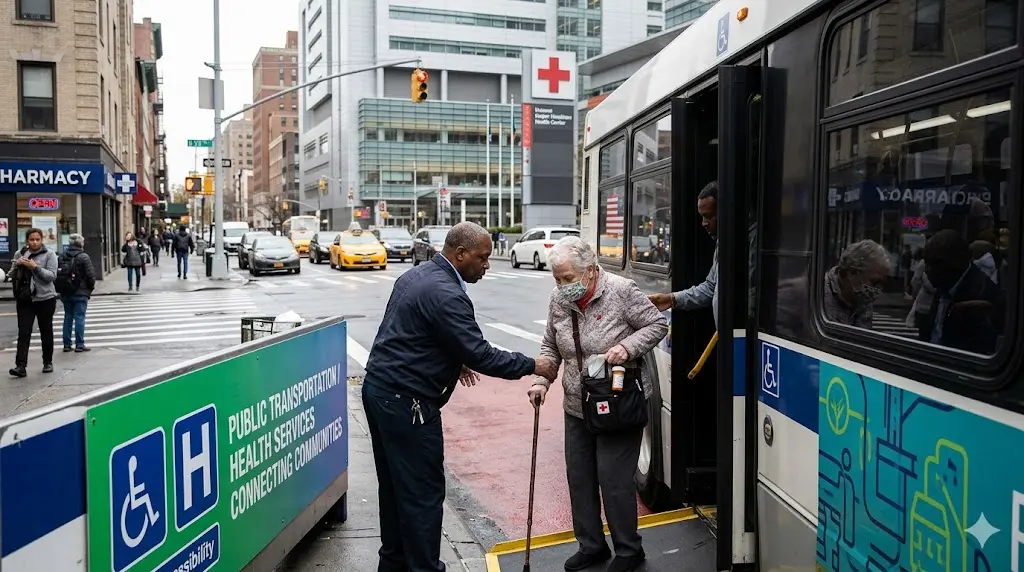
Public transportation and healthcare are now deeply connected. When buses, trains, and local transit systems become unreliable, overcrowded, or expensive, people often delay medical appointments, miss treatments, or struggle to access emergency care. That’s why concerns around healthcare transportation access are growing across the world in 2026.
Healthcare systems depend heavily on safe and accessible public transportation. Rising urban congestion, aging populations, longer commute times, and unequal transit access are making healthcare transportation a serious public health issue. In many cases, patients without reliable transport experience worse health outcomes and higher medical costs.
What Is Public Transportation in Healthcare Context?
Public transportation in healthcare: A system of buses, trains, shared transit, and community mobility services that help patients, caregivers, and healthcare workers reach hospitals, clinics, pharmacies, and emergency facilities.
Here’s the thing. Most people think healthcare begins when a patient enters a hospital. In reality, healthcare often begins the moment someone tries to reach one.
If transportation fails, treatment can fail too.
That sounds dramatic, but I’ve seen reports and local examples where patients skipped chemotherapy sessions because a two-hour commute became impossible during transit strikes or fuel shortages. Elderly patients often depend on affordable transit more than private vehicles, especially in crowded urban regions.
Research from organizations like World Health Organization and Centers for Disease Control and Prevention continues to show that transportation barriers directly affect public health access, chronic disease management, and preventive care participation.
Why Public Transportation Is a Growing Concern in Healthcare Worldwide in 2026
Healthcare transportation issues aren’t new, but 2026 has amplified the problem for several reasons.
Rising Urban Population Pressure
Cities continue expanding faster than infrastructure upgrades. Hospitals in large metro areas are now serving millions more residents while transit systems remain overstretched.
A patient might live only 12 kilometers away from a medical center, yet still spend two hours commuting because of traffic congestion, delayed buses, or overcrowded rail systems.
That delay matters more than people realize.
For dialysis patients, pregnant women, disabled individuals, or seniors managing chronic illnesses, transportation delays can become health risks rather than minor inconveniences.
Healthcare Inequality Is Becoming More Visible
What most people overlook is that transportation inequality often mirrors healthcare inequality.
Wealthier communities usually have:
Faster transit systems
More healthcare facilities
Better road connectivity
More private transportation options
Lower-income communities often face the opposite reality.
In many countries, patients in rural or underserved areas still travel several hours for specialist appointments. Some skip care altogether because the transportation cost exceeds the treatment cost.
That’s a pretty uncomfortable truth.
Healthcare Worker Shortages Are Connected to Transit Problems
Hospitals worldwide are struggling to recruit nurses, technicians, and support staff. Transportation plays a bigger role than many administrators expected.
Long commutes increase burnout. Unpredictable transit reduces punctuality. Some workers simply leave urban healthcare jobs because daily travel becomes exhausting.
In my experience, healthcare staffing conversations rarely include transportation planning, even though the two are tightly linked.
Climate Policies Are Changing Mobility Habits
Many governments are encouraging reduced private car usage to lower emissions. While environmentally beneficial, this shift also increases pressure on public transportation systems.
Hospitals now depend more heavily on reliable public mobility than they did a decade ago.
Ironically, greener transportation goals can unintentionally expose healthcare weaknesses if transit expansion doesn’t keep pace.
How Public Transportation Affects Healthcare Outcomes
Healthcare transportation access directly influences patient outcomes in several ways.
Missed Medical Appointments
Patients without dependable transit frequently cancel appointments or arrive late. This is especially common in:
Cancer treatment
Physical rehabilitation
Mental health therapy
Prenatal care
Chronic disease management
Even one missed appointment can delay diagnosis or worsen recovery timelines.
Medication Access Problems
Pharmacies are not always located near underserved communities. Patients relying on inconsistent transportation may delay prescription refills, which increases complications for conditions like diabetes or hypertension.
Emergency Response Delays
Emergency care depends on mobility infrastructure.
Flooded roads, overcrowded cities, transport strikes, or weak rural connectivity can slow emergency response times significantly.
One hypothetical but realistic example: a stroke patient in a suburban area experiences severe delays reaching a neurological center because rail service disruptions block the fastest route. Minutes matter during strokes. Transportation becomes part of the medical emergency itself.
How to Improve Healthcare Transportation Access — Step by Step
Healthcare systems can reduce transportation-related healthcare problems through practical changes.
1. Expand Transit Routes Around Medical Hubs
Cities should prioritize direct transportation routes connecting residential areas to hospitals and clinics.
Not every patient owns a car. Planning healthcare mobility around private transportation no longer works in many regions.
2. Introduce Subsidized Medical Transit Programs
Governments and hospitals can offer reduced-fare transportation for:
Elderly patients
Low-income families
Disabled individuals
Long-term treatment patients
Rural residents
Several countries already pilot these systems successfully.
3. Integrate Telemedicine Where Appropriate
Telemedicine doesn’t replace physical healthcare entirely, but it reduces unnecessary travel for follow-up consultations and routine monitoring.
That small adjustment alone can reduce hospital congestion dramatically.
4. Improve Rural Transportation Infrastructure
Rural healthcare transportation remains one of the weakest global healthcare links.
Better roads, community shuttle systems, and mobile clinics can help close the access gap.
5. Use Real-Time Mobility Technology
Smart transit tracking apps help patients plan routes more accurately and reduce missed appointments.
Hospitals are increasingly integrating transportation notifications into patient scheduling systems.
Common Misconception About Public Transportation and Healthcare
Better Hospitals Alone Don’t Solve Healthcare Access
This might sound counterintuitive, but building advanced hospitals doesn’t automatically improve healthcare outcomes.
A world-class hospital means very little if patients can’t reliably reach it.
Here’s a hot take most policymakers probably don’t say loudly enough: transportation investment may improve community health faster than some hospital expansions.
That’s because access often matters before treatment quality even enters the conversation.
Expert Tips and What Actually Works
From what I’ve seen, healthcare transportation solutions succeed when they stay practical rather than overly ambitious.
Massive transit megaprojects often take years. Communities need faster fixes too.
Smaller actions can create meaningful impact:
Flexible shuttle services near clinics
Transit discounts linked to healthcare cards
Mobile pharmacy vans
Community ride-sharing partnerships
Appointment scheduling synced with local transit availability
One hospital network in a hypothetical mid-sized city reduced missed appointments by nearly 20% simply by adjusting appointment times around public transit schedules.
Not glamorous. Very effective.
Expert Tip
Healthcare administrators should analyze transportation data alongside patient attendance records. Patterns usually appear quickly, especially in underserved neighborhoods.
Why Public Transportation Challenges Affect Global Public Health
Transportation isn’t only a logistics issue anymore. It’s becoming a public health stability issue.
When mobility systems fail, several things happen:
Preventive care decreases
Emergency systems slow down
Healthcare costs rise
Disease management weakens
Vulnerable populations suffer more
Pandemic recovery periods also exposed how dependent healthcare systems are on transportation continuity.
Many healthcare workers struggled to reach hospitals during lockdowns and transit restrictions. Patients postponed treatments. Chronic conditions worsened quietly in the background.
People remember overloaded hospitals from those years. Fewer people talk about transportation breakdowns behind the scenes.
What Healthcare Systems Are Doing Differently in 2026
Healthcare organizations are adapting in several noticeable ways.
Mobile Healthcare Expansion
Mobile clinics are expanding across urban outskirts and rural regions to reduce patient travel needs.
Transportation Partnerships
Hospitals increasingly collaborate with rideshare providers, local transit agencies, and nonprofit organizations.
Smart Scheduling Systems
AI-assisted scheduling tools now attempt to match appointments with realistic travel windows.
That sounds simple, but it helps more than expected.
Accessibility Planning
Healthcare construction projects now include transportation accessibility studies before approval in many regions.
Honestly, this should’ve happened years ago.
The Economic Impact of Healthcare Transportation Problems
Poor transportation access creates financial strain for both patients and healthcare systems.
Patients may face:
Lost wages
Higher travel expenses
Delayed diagnoses
Additional childcare costs
Healthcare providers may experience:
Increased appointment cancellations
Lower operational efficiency
Higher emergency care costs
Staffing instability
One missed appointment doesn’t seem expensive at first. Scale that across thousands of patients every month and the numbers become huge.
Unexpected Issue: Transportation Stress and Mental Health
Here’s something many discussions ignore completely.
Transportation stress itself affects health.
Long commutes, crowded transit, unpredictable delays, and unsafe travel environments increase anxiety and emotional fatigue. Patients already managing illness may experience even greater mental strain.
I think this part gets underestimated because transportation discussions usually focus only on logistics or economics.
But emotional exhaustion matters too.
People Most Asked About Public Transportation and Healthcare
Why is public transportation important for healthcare?
Public transportation helps patients, caregivers, and healthcare workers reach medical services safely and affordably. Without reliable transit, many people delay treatment or miss appointments entirely.
How does transportation affect patient outcomes?
Transportation barriers often lead to delayed diagnoses, interrupted treatments, and reduced preventive care participation. Reliable mobility improves healthcare continuity and treatment adherence.
Why are rural areas more affected by healthcare transportation issues?
Rural communities typically have fewer hospitals, longer travel distances, and weaker transit infrastructure. Patients may travel hours for specialized care that urban residents access locally.
Can telemedicine solve healthcare transportation problems?
Telemedicine helps reduce unnecessary travel for consultations and routine follow-ups. However, physical transportation remains essential for surgeries, emergencies, diagnostics, and hands-on treatment.
How do transportation problems affect healthcare workers?
Long commutes and unreliable transit contribute to burnout, lateness, staffing shortages, and reduced job satisfaction among healthcare professionals.
Are governments investing in healthcare transportation solutions?
Many governments are increasing investment in mobility infrastructure, subsidized transport programs, and digital healthcare access systems. Progress varies significantly between countries.
What industries are connected to healthcare transportation?
Healthcare transportation overlaps with public transit planning, digital mobility technology, urban development, emergency response systems, and telehealth infrastructure.
Final Thoughts on Why Public Transportation Is a Growing Concern in Healthcare Worldwide
Public transportation and healthcare are no longer separate policy discussions. They’re interconnected systems influencing global public health every single day.
As cities grow and healthcare demands rise, transportation access will probably become one of the defining healthcare challenges of the next decade. Hospitals alone can’t solve healthcare inequality if patients and workers struggle to reach them consistently.
At least from what I’ve seen, the smartest healthcare systems in 2026 are the ones treating transportation as part of healthcare itself rather than an unrelated infrastructure issue.
Our network supports businesses, agencies, startups, and publishers looking to improve online authority through press release distribution services and targeted digital marketing services. With stronger brand visibility, high authority backlinks, wider media coverage, and instant publishing opportunities, companies can improve SEO ranking and drive sustainable organic traffic through trusted promotional campaigns tailored for modern search performance.