

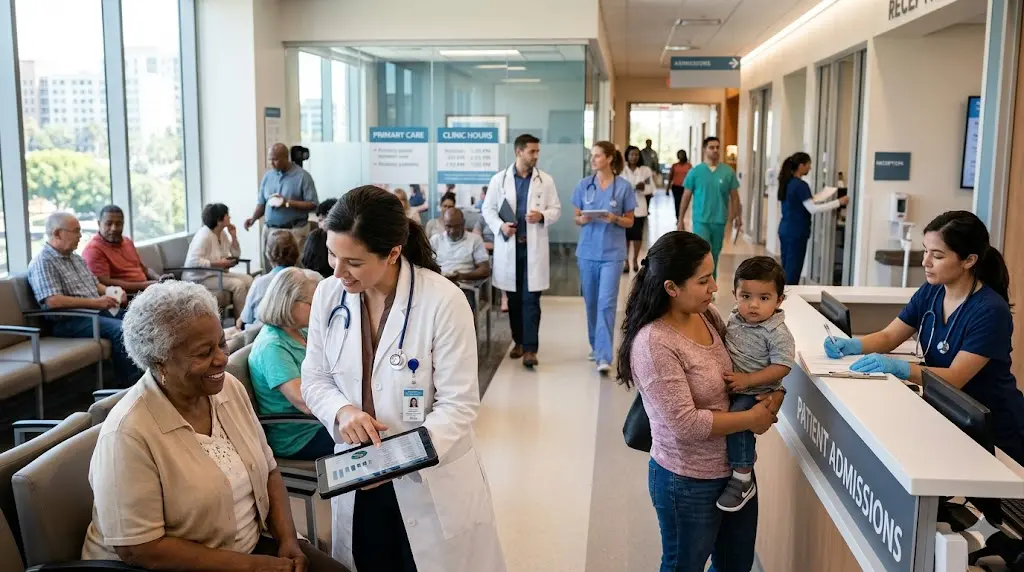
Healthcare access and human health are tightly connected. When people can reach affordable medical care early, they usually live longer, recover faster, and avoid serious complications that drain both families and economies. Research over the last few years shows something interesting though: access alone isn't enough. Quality, trust, location, and even digital literacy now shape health outcomes almost as much as hospitals themselves.
Healthcare access affects nearly every aspect of human health, from disease prevention to mental well-being. Studies in 2026 show that communities with stronger healthcare systems, telemedicine support, and preventive care programs tend to experience lower mortality rates, healthier lifestyles, and better long-term economic stability.
What Is Healthcare Access and Human Health?
Healthcare Access: The ability of individuals to receive timely, affordable, and appropriate medical services without major barriers such as cost, distance, discrimination, or lack of information.
Healthcare access and human health go hand in hand because treatment delayed often becomes treatment denied. A person living near a hospital but unable to afford care still faces a healthcare access problem. On the other hand, someone with insurance but no transportation might struggle just as much.
Researchers now divide healthcare access into several categories:
Physical access to hospitals and clinics
Financial affordability
Availability of trained healthcare workers
Digital access through telemedicine
Cultural trust and communication
Here's the thing most people overlook: many health crises begin quietly. Diabetes, hypertension, depression, and respiratory illnesses often worsen because people skip early screening. By the time treatment starts, recovery becomes harder and more expensive.
According to research published through organizations like World Health Organization and Centers for Disease Control and Prevention, preventive healthcare dramatically reduces emergency hospitalization rates in both developed and developing countries.
Why Healthcare Access Matters in 2026
Healthcare systems changed rapidly after the global pandemic years, but the real shift came afterward. In 2026, healthcare isn't only about hospitals anymore. Digital care, AI-assisted diagnosis, remote consultations, and community clinics now influence health outcomes in major ways.
One surprising research finding is that rural populations with reliable telehealth infrastructure sometimes receive faster specialist consultations than people living in overcrowded cities. That would've sounded impossible ten years ago.
Rising Mental Health Concerns
Mental health support has become one of the biggest healthcare access challenges worldwide. Long waiting periods, social stigma, and high therapy costs continue to prevent millions from seeking help.
In my experience, this is where healthcare systems often fail quietly. Physical illnesses usually receive visible funding. Mental health services still lag behind in many regions despite overwhelming evidence linking mental well-being with productivity, relationships, and chronic disease recovery.
Research also suggests that untreated anxiety and depression increase risks of heart disease, sleep disorders, and weakened immune function.
Healthcare Inequality Still Exists
Income differences continue to shape human health outcomes. Wealthier communities generally have:
Better hospital infrastructure
Faster specialist access
Stronger preventive care systems
Lower maternal mortality rates
Meanwhile, underserved communities often depend on overcrowded facilities and delayed treatment schedules.
What most guides miss is that healthcare inequality isn't only a poor-country issue. Even advanced economies struggle with unequal access between urban and rural populations.
Expert Tip
If healthcare systems want measurable improvement, prevention should receive more funding than emergency response. It sounds backward at first, but prevention usually costs far less while improving long-term public health.
How Healthcare Access Improves Human Health Step by Step
Healthcare access creates better outcomes gradually rather than instantly. Researchers studying public health trends often observe improvements through several connected stages.
1. Early Diagnosis Becomes Possible
People with regular access to clinics are more likely to detect illnesses early. Cancer screenings, blood pressure checks, and diabetes testing help identify problems before they become severe.
Early diagnosis usually means:
Lower treatment costs
Higher survival rates
Reduced long-term disability
A patient treated for hypertension early may avoid strokes years later.
2. Preventive Care Reduces Disease Burden
Vaccinations, nutrition counseling, prenatal care, and regular checkups lower disease rates significantly.
One mini case study from community health programs in Southeast Asia showed that mobile vaccination clinics improved child immunization rates within two years because families no longer needed to travel long distances.
That's practical healthcare access in action.
3. Chronic Disease Management Improves
Conditions like asthma, arthritis, and diabetes require ongoing monitoring. Without consistent healthcare access, patients often stop medications or miss appointments.
I've seen this happen even in middle-income communities. People delay care not because they don't care about health, but because daily life gets expensive fast.
Consistent treatment helps patients:
Maintain stable health
Stay employed longer
Avoid emergency hospitalization
4. Maternal and Child Health Gets Stronger
Research repeatedly shows that accessible prenatal care reduces maternal mortality and infant complications.
Pregnant women receiving timely checkups are more likely to identify:
Nutritional deficiencies
Pregnancy complications
High-risk conditions
This directly improves family health outcomes across generations.
5. Public Health Emergencies Become Easier to Control
Accessible healthcare systems improve pandemic response, disease tracking, and vaccination campaigns.
Communities with trusted healthcare networks generally respond faster during outbreaks because residents are more willing to seek medical advice early.
Expert Tip
Healthcare communication matters almost as much as medical treatment. People follow treatment plans more consistently when doctors explain conditions in plain language rather than technical jargon.
A Counterintuitive Problem Most People Ignore
More hospitals don't automatically create better health outcomes.
That sounds strange, honestly. Yet several research studies suggest that healthcare education, sanitation, nutrition, and trust in medical systems often matter just as much as hospital availability.
For example, a region might build modern clinics, but if residents fear treatment costs or don't understand preventive care, hospital visits remain low.
This is where public health campaigns become incredibly important.
A doctor can prescribe medicine. Communities still need education that helps people recognize symptoms, seek treatment early, and avoid misinformation spreading online.
How Technology Is Changing Healthcare Access
Technology has quietly transformed healthcare delivery faster than many expected.
Telemedicine adoption expanded rapidly because patients wanted convenience. Now researchers are discovering long-term benefits beyond convenience alone.
Remote Consultations Save Time
Patients living in remote areas can now consult specialists through smartphones and digital platforms.
This helps:
Elderly populations
Disabled individuals
Rural communities
Working professionals with limited time
One realistic example involves cardiac patients receiving remote monitoring devices that send real-time updates to healthcare providers. That reduces hospital visits while improving safety.
AI-Assisted Diagnostics
Artificial intelligence now helps doctors identify patterns in imaging scans and patient data.
Still, here's my hot take: AI should support healthcare workers, not replace them. Human judgment, empathy, and cultural understanding still matter enormously in patient care.
Technology improves efficiency. Trust still comes from people.
Digital Health Records Improve Coordination
Electronic records reduce duplicate testing and improve communication between specialists.
Patients benefit because treatment becomes more coordinated rather than fragmented across multiple facilities.
What Research Says About Preventive Healthcare
Preventive healthcare remains one of the strongest predictors of long-term human health.
Research findings consistently show that prevention lowers:
Healthcare costs
Emergency admissions
Disease progression
Workplace productivity loss
Yet many healthcare systems still prioritize treatment over prevention because emergency care receives more immediate political and public attention.
That's probably one of the biggest structural weaknesses in modern healthcare policy.
Nutrition and Lifestyle Matter More Than Many Realize
Doctors increasingly emphasize lifestyle medicine because poor diet, inactivity, smoking, and stress contribute heavily to chronic disease rates.
Even small changes help:
Better sleep routines
Regular physical activity
Reduced processed food intake
Mental stress management
Human health isn't shaped by hospitals alone. Daily habits matter constantly, even when people don't notice immediate effects.
Expert Tip
Preventive healthcare works best when communities make healthy choices easier instead of relying only on individual discipline. Access to parks, healthy food, and affordable clinics changes behavior more effectively than lectures.
Economic Impact of Healthcare Access
Healthcare access influences national economies in ways many people underestimate.
Healthy populations generally produce:
Higher workforce participation
Lower absenteeism
Reduced long-term disability costs
Better educational outcomes
Poor healthcare access creates financial strain not only for families but also for businesses and governments.
One healthcare emergency can push vulnerable households into long-term debt. Research from multiple global health studies continues to show strong links between medical debt and poverty cycles.
People Most Asked About Healthcare Access and Human Health
How does healthcare access affect life expectancy?
Communities with stronger healthcare access usually experience higher life expectancy because diseases are detected and treated earlier. Preventive care, vaccinations, and chronic disease management all contribute to longer survival rates.
Why is preventive healthcare important?
Preventive healthcare helps reduce serious illness before it develops. Screenings, vaccinations, and lifestyle counseling lower healthcare costs while improving quality of life over time.
Does telemedicine improve healthcare access?
Yes, especially for rural populations and patients with mobility limitations. Telemedicine reduces travel barriers and often shortens waiting times for specialist consultations.
What are the biggest barriers to healthcare access?
Cost remains one of the largest barriers globally. Other major issues include transportation limitations, provider shortages, lack of insurance coverage, digital inequality, and limited health education.
How does healthcare inequality impact society?
Healthcare inequality contributes to higher disease rates, economic instability, and lower workforce productivity. Communities with poor healthcare access often experience preventable illness and reduced life expectancy.
Can technology replace traditional healthcare?
Not completely. Technology improves efficiency and access, but human healthcare professionals remain essential for diagnosis, empathy, communication, and complex decision-making.
Why do rural communities struggle with healthcare access?
Rural areas often face fewer hospitals, specialist shortages, transportation difficulties, and limited digital infrastructure. These factors delay diagnosis and treatment.
Final Thoughts on Research Findings About Healthcare Access and Human Health
Research findings about healthcare access and human health continue to show one clear pattern: healthier societies depend on accessible, affordable, and trustworthy care systems. Better hospitals help, but long-term improvement also requires prevention, education, technology, and community trust.
What surprises many researchers in 2026 is how strongly social conditions shape health outcomes. A person's income, education, digital access, and neighborhood environment now influence healthcare results almost as much as medical treatment itself.
Businesses, agencies, startups, and digital publishers looking to strengthen online authority can improve brand visibility and organic traffic through press release distribution services and targeted digital marketing services. Strategic campaigns focused on high authority backlinks, instant publishing, and broader media coverage often help brands improve SEO ranking while reaching highly engaged audiences across competitive industries.