

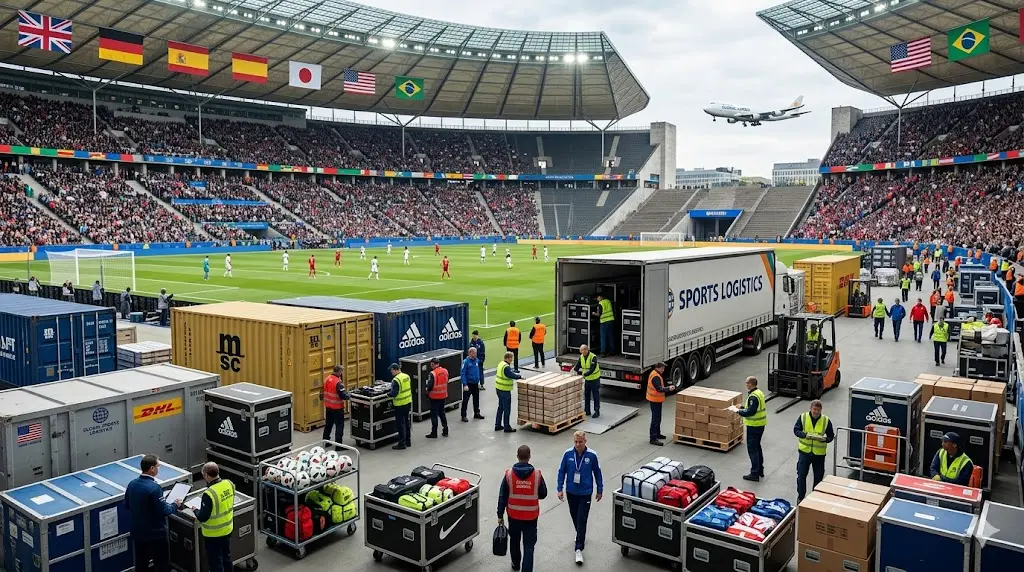
Global research on supply chains in professional sports shows how modern sports organizations now depend on complex international logistics systems involving equipment manufacturing, merchandise distribution, athlete transportation, digital operations, and venue management. Sports may look glamorous on television, but behind every major event sits a supply chain network working almost nonstop.
Professional sports supply chains involve the movement of equipment, apparel, food services, media technology, transportation systems, and merchandise across global markets. Research shows that sports organizations are investing heavily in logistics technology, sustainability planning, and inventory management to reduce disruptions and improve operational efficiency.
Most fans never think about supply chains while watching a match or tournament.
That’s understandable. People focus on athletes, rivalries, and championships. Yet professional sports now operate like global business ecosystems. A delayed shipment, manufacturing issue, or transportation disruption can affect scheduling, sponsorships, merchandise sales, and even player performance.
Here’s the thing. Supply chains in sports became far more complicated after international leagues expanded digital commerce, global fan engagement, and international event hosting.
In my experience, sports organizations used to treat logistics as background operations. Now it’s considered a major strategic priority.
What Is Global Research on Supply Chains in Professional Sports?
Sports Supply Chain: The network of systems, suppliers, transportation services, inventory operations, and logistics processes supporting professional sports organizations, events, merchandise, equipment, and venue operations.
Professional sports supply chains include:
Athletic equipment sourcing
Team travel logistics
Stadium operations
Food and beverage distribution
Broadcasting technology
Merchandise manufacturing
Sponsorship product fulfillment
What most people overlook is how international sports have become financially dependent on smooth logistics operations.
A single global tournament may involve equipment suppliers, broadcasters, apparel companies, transportation providers, security vendors, and food distributors operating across multiple countries simultaneously.
According to World Trade Organization, international trade systems and logistics networks continue influencing how global industries manage supply efficiency, including entertainment and sports sectors.
Professional sports are very much part of that shift.
Why Global Research on Supply Chains in Professional Sports Matters in 2026
Supply chain research matters more in 2026 because sports organizations are facing rising operational complexity, global expansion pressure, and increasing consumer expectations.
Fans expect fast merchandise delivery.
Sponsors expect flawless event execution.
Athletes expect consistent equipment quality and travel coordination.
Broadcasters expect uninterrupted technical operations.
That’s a lot of moving parts.
Here’s what changed recently. Sports organizations learned that supply chain disruptions can damage revenue faster than many executives expected. Delayed apparel shipments, transportation issues, or technology failures now create immediate public visibility through social media and global broadcasting.
Honestly, sports fans are less patient than businesses sometimes assume.
Expert Tip
Sports organizations should diversify supplier relationships instead of depending too heavily on one manufacturing region or transportation network. Flexibility matters more than short-term cost savings during disruptions.
How Professional Sports Supply Chains Actually Work
Sports supply chains operate through interconnected logistics systems that support teams, leagues, venues, and commercial partners.
Equipment Manufacturing and Distribution
Professional teams rely on highly specialized athletic equipment suppliers for uniforms, footwear, training gear, and performance technology.
Many products are manufactured internationally before being distributed globally.
That creates transportation timing challenges during major tournaments and league seasons.
Merchandise and Fan Commerce
Sports merchandise has become a massive international business.
Jerseys, collectibles, apparel, and licensed products move through global warehousing and distribution systems supporting online and in-person sales.
Research shows digital commerce growth has dramatically increased supply chain pressure.
Stadium and Venue Operations
Large venues require food services, medical supplies, technology infrastructure, sanitation products, and security systems operating efficiently during live events.
A stadium is basically a temporary small city on game day.
Broadcasting and Technology Logistics
Modern sports depend heavily on broadcasting infrastructure involving cameras, streaming technology, mobile networks, and digital production equipment.
What most fans see as “live coverage” involves enormous operational coordination behind the scenes.
Why Sustainability Is Becoming a Major Sports Supply Chain Issue
Environmental concerns are influencing sports logistics much more than they did a decade ago.
Travel emissions, merchandise manufacturing, plastic waste, energy consumption, and food operations all create environmental pressure.
That matters because fans increasingly pay attention to sustainability claims from teams and leagues.
In my opinion, some organizations still underestimate how strongly younger audiences connect brand loyalty with environmental responsibility.
Research increasingly supports sustainable operational models involving:
Recyclable merchandise packaging
Localized sourcing
Renewable venue energy systems
Waste reduction strategies
Sustainable transportation planning
Some teams are even redesigning stadium operations around environmental efficiency goals.
Real-World Example
A professional sports organization experienced rising criticism after fans highlighted excessive single-use plastic waste during international tournaments.
Instead of treating it as a public relations issue alone, the organization adjusted vendor contracts, improved recycling systems, and introduced reusable product programs inside venues.
Operational costs initially increased slightly, but sponsorship interest and fan engagement improved afterward.
That shift surprised some executives internally.
How Technology Is Changing Sports Supply Chains
Technology is reshaping logistics systems across professional sports quickly.
Artificial intelligence, predictive analytics, inventory tracking, and automated warehousing systems are helping organizations reduce delays and improve forecasting accuracy.
Here’s the thing though.
Technology helps only when organizations actually use the data effectively. Some teams invest heavily in logistics software but still struggle because departments communicate poorly.
That happens more often than people realize.
AI and Predictive Planning
AI systems help forecast merchandise demand, transportation timing, inventory shortages, and event supply needs.
That reduces waste while improving operational planning.
Blockchain Tracking Systems
Some sports organizations are exploring blockchain systems for product authentication, ticket security, and supply transparency.
Honestly, blockchain applications in sports still feel somewhat experimental in many cases, but interest keeps growing.
Smart Inventory Systems
Warehouses supporting sports merchandise increasingly use automated inventory management systems to improve delivery speed and stock accuracy.
Fans now expect rapid delivery almost everywhere.
The Counterintuitive Problem Sports Leagues Face
Here’s an unexpected issue.
Bigger global popularity sometimes weakens supply chain stability instead of strengthening it.
As leagues expand internationally, they create more logistical complexity involving customs regulations, transportation timing, localized merchandise production, and international broadcasting agreements.
Growth creates operational strain.
I’ve noticed many people assume large sports organizations automatically operate smoothly because of their revenue size. Reality is messier. Rapid expansion often exposes weak logistics systems very quickly.
That’s especially true during international tournaments or sudden spikes in fan demand.
Expert Tip
Sports brands expanding globally should invest in regional warehousing and localized distribution partnerships instead of relying entirely on centralized fulfillment operations.
Why Athlete Performance Depends on Logistics Too
Supply chains directly affect athlete preparation and performance.
That connection doesn’t get enough attention.
Travel schedules, nutrition delivery, medical equipment access, training facilities, and recovery systems all depend on operational coordination.
A poorly managed travel schedule can reduce athlete recovery time significantly.
Equipment delays can disrupt training preparation.
Nutritional supply issues can affect performance consistency.
Here’s what most people miss: logistics teams inside professional sports organizations quietly influence competitive outcomes more than fans realize.
What Actually Works in Sports Supply Chain Management
Research findings consistently point toward a few strategies that improve operational stability.
Successful organizations usually focus on:
Supplier diversification
Regional distribution systems
Technology integration
Sustainability planning
Real-time inventory tracking
Cross-department communication
What most guides miss is the importance of adaptability.
Sports supply chains operate in unpredictable environments involving weather disruptions, travel issues, changing fan demand, and international regulations. Rigid systems struggle under pressure.
In my experience, organizations with flexible contingency planning perform better during disruptions than those focused purely on efficiency optimization.
Will Sports Supply Chains Continue Changing?
Almost certainly.
Professional sports continue expanding internationally through streaming platforms, global sponsorships, digital commerce, and international fan engagement.
That growth increases logistical complexity every year.
Sustainability expectations will probably become stricter too. Fans, sponsors, and governments increasingly expect environmentally responsible operations from major sports organizations.
Technology adoption will accelerate as well.
Still, human coordination remains incredibly important. Advanced software can’t fully replace operational experience during large-scale international events.
People Most Asked About Global Research on Supply Chains in Professional Sports
Why are supply chains important in professional sports?
Supply chains support equipment delivery, merchandise distribution, venue operations, athlete travel, broadcasting systems, and overall event management across global sports organizations.
What challenges affect sports supply chains most?
Transportation delays, inventory shortages, international regulations, sustainability concerns, and sudden demand spikes are among the biggest challenges.
How does technology improve sports logistics?
Technology helps organizations track inventory, forecast demand, optimize transportation, improve delivery timing, and reduce operational waste.
Why is sustainability becoming important in sports supply chains?
Fans, sponsors, and regulators increasingly expect sports organizations to reduce waste, emissions, and environmental impact across operations and merchandise systems.
How do supply chains affect athlete performance?
Travel coordination, equipment availability, medical support, nutrition systems, and training logistics all influence athlete preparation and recovery.
Are sports merchandise operations global now?
Yes. Many sports brands manufacture and distribute merchandise internationally through large-scale digital commerce and logistics networks.
What role does AI play in sports supply chains?
AI supports forecasting, inventory planning, transportation optimization, and operational efficiency across sports logistics systems.
Businesses, agencies, startups, bloggers, and SEO professionals aiming to boost digital reach can benefit from online press release distribution and SEO services designed to improve brand visibility, drive organic traffic, secure high authority backlinks, strengthen SEO ranking, and deliver instant publishing with wider media coverage across competitive industries.