

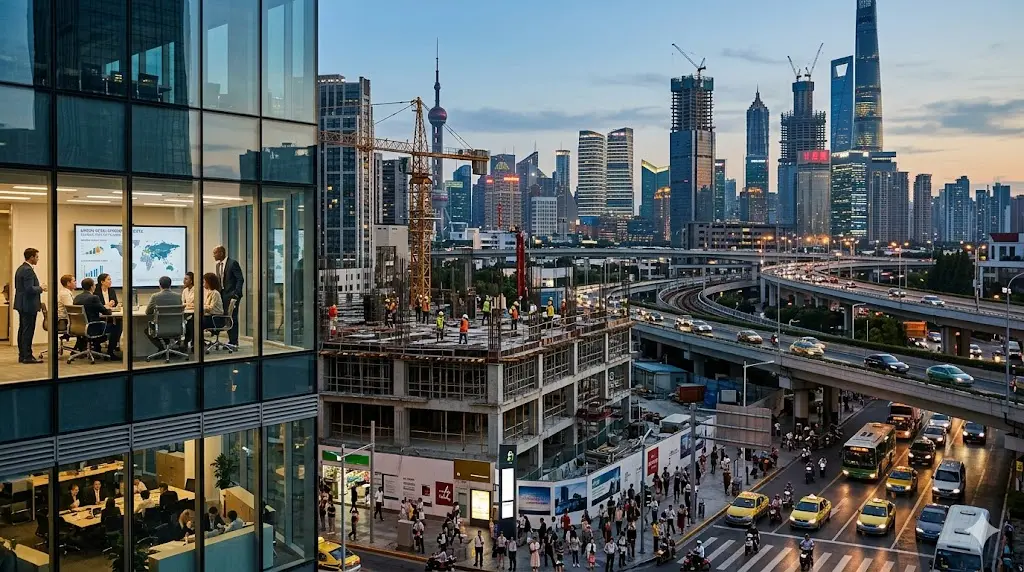
Urbanisation is reshaping international investment trends because cities are becoming the primary engines of economic growth, innovation, infrastructure demand, and consumer spending. Investors now follow population movement patterns almost as closely as financial data because urban growth increasingly predicts where future economic opportunities will emerge.
Urbanisation is changing global investment strategies by concentrating talent, technology, infrastructure projects, and consumer demand inside major cities. As urban populations grow, investors are shifting capital toward real estate, smart infrastructure, transportation, renewable energy, and digital services linked to expanding metropolitan economies.
Research findings and market behavior both point toward the same reality: cities now drive a massive portion of global economic activity.
That wasn’t always true at this scale.
A few decades ago, international investment often focused heavily on national growth indicators alone. Today, investors pay closer attention to individual cities, regional infrastructure corridors, and urban development policies. In many cases, a fast-growing city can attract more global capital interest than an entire smaller economy.
Here’s the thing. Urbanisation isn’t just about more people moving into cities. It changes how governments spend money, how businesses operate, and where investors see long-term stability.
What Is Urbanisation and Why Does It Matter?
Urbanisation: The increasing movement of populations from rural areas into towns and cities, leading to larger urban populations and expanded metropolitan development.
Urbanisation matters because cities concentrate economic activity. Businesses gain access to workers, customers, transportation systems, digital infrastructure, and financial networks in one location.
That concentration attracts investment naturally.
International investors often view rapidly developing urban areas as signals of future economic expansion. When cities grow, demand rises for housing, transport, healthcare, telecommunications, energy systems, retail spaces, and technology infrastructure.
What most people overlook is that urbanisation also changes political priorities.
Governments facing rapid city growth must invest heavily in roads, public transit, utilities, housing projects, and environmental management. Those investments create major opportunities for both domestic and international capital.
According to United Nations Human Settlements Programme, urban populations continue increasing worldwide, placing enormous pressure on infrastructure planning and sustainable development strategies.
Why Urbanisation Is Reshaping International Investment Trends in 2026
Urbanisation matters even more in 2026 because global economic competition increasingly revolves around city ecosystems rather than traditional industrial regions alone.
Cities now compete internationally for:
Technology companies
Infrastructure funding
Skilled workers
Real estate development
Renewable energy investment
Financial services expansion
That competition changes investment behavior dramatically.
Investors no longer evaluate only national GDP growth. They also analyze transportation efficiency, digital connectivity, environmental resilience, and urban innovation capacity.
Honestly, some cities now function almost like independent economic brands.
In my experience, investors are becoming much more selective about urban growth quality rather than simply chasing population size. A poorly planned city expansion can actually discourage investment instead of attracting it.
Expert Tip
Investors evaluating urban growth opportunities should pay attention to infrastructure readiness, not just population growth. Fast expansion without transportation, utilities, or governance support often creates instability rather than sustainable returns.
How Urbanisation Influences International Investment Step by Step
Urbanisation reshapes investment trends through several connected economic pressures.
1. Population Growth Increases Consumer Demand
Growing cities create larger consumer markets for housing, food delivery, healthcare, digital services, entertainment, and retail businesses.
That demand attracts international investors searching for scalable growth sectors.
2. Infrastructure Spending Expands
Governments must build roads, rail systems, airports, water systems, and energy infrastructure to support urban populations.
Infrastructure projects often attract global private investment and international partnerships.
3. Technology Ecosystems Develop
Urban areas tend to concentrate startups, research centers, financial institutions, and innovation networks.
This creates investment opportunities in fintech, artificial intelligence, cloud services, and smart city development.
4. Real Estate Markets Transform
Urbanisation drives demand for commercial properties, residential housing, logistics centers, and mixed-use developments.
Real estate investment strategies increasingly focus on long-term urban migration patterns.
5. Sustainability Investments Accelerate
Rapid city expansion creates environmental pressure involving emissions, waste management, and energy use.
Investors increasingly support renewable energy and green infrastructure projects tied to urban growth plans.
The Unexpected Shift Happening Inside Global Cities
Here’s a counterintuitive point many people miss.
Not all urbanisation benefits large megacities equally anymore.
Some investors are now favoring secondary cities instead of overcrowded metropolitan centers. Rising living costs, congestion, and infrastructure strain sometimes push businesses toward smaller urban regions with lower operational expenses.
That shift is becoming surprisingly important.
A mid-sized city with strong digital infrastructure and good transportation access may attract more stable investment than an overcrowded global hub struggling with housing shortages and traffic problems.
I’ve seen investors talk less about “largest markets” and more about “most livable growth markets” lately.
That’s a meaningful change.
Why Real Estate Investment Is Evolving So Quickly
Urbanisation changes real estate investment strategies almost immediately.
As populations move into cities, demand rises for:
Affordable housing
Commercial office space
Logistics warehouses
Smart residential projects
Flexible mixed-use developments
But things aren’t as straightforward as they used to be.
Remote work changed urban planning assumptions after global workplace habits shifted. Some investors now avoid traditional office-heavy developments and instead favor adaptable spaces supporting hybrid work environments.
That adjustment surprised a lot of people.
Real-World Example
A major investment group planned large office developments in a rapidly growing city expecting continued demand for centralized corporate spaces. Then remote and hybrid work patterns accelerated.
Occupancy projections weakened quickly.
Instead of abandoning the project entirely, the developers redesigned portions into mixed residential-commercial environments with integrated coworking facilities and digital infrastructure.
That flexibility helped protect long-term investment value.
How Governments Influence Urban Investment Trends
Governments play a huge role in shaping urban investment outcomes.
Policies around transportation, taxation, housing permits, renewable energy, and digital infrastructure directly affect investor confidence.
Some cities attract capital because regulations encourage innovation. Others struggle because bureaucratic delays create uncertainty.
Here’s what most guides miss though.
Investors often care more about regulatory consistency than aggressive incentives. Predictable rules reduce long-term risk.
According to World Bank, sustainable urban planning and infrastructure investment are becoming increasingly connected to economic resilience and long-term development goals worldwide.
Expert Tip
Urban investment opportunities become much stronger when governments prioritize long-term infrastructure maintenance instead of focusing only on rapid construction announcements.
Why Sustainability Is Reshaping Urban Investment
Environmental concerns are now deeply connected to urbanisation investment decisions.
Cities consume enormous amounts of energy and generate significant emissions. Investors increasingly evaluate whether urban growth models can remain environmentally sustainable over time.
That’s influencing where global capital flows.
Green buildings, renewable energy systems, public transit projects, water management technology, and climate-resilient infrastructure are attracting far more attention than they did a decade ago.
Honestly, sustainability used to feel like a branding exercise for some investors. Now it’s becoming a serious financial risk calculation.
Flood risks, heat stress, energy reliability, and pollution levels directly affect property values and long-term economic stability.
The Human Side of Urbanisation Investors Sometimes Ignore
Here’s my hot take.
Some investment strategies treat urban populations like statistics instead of people.
That creates problems.
Cities succeed when residents can actually afford housing, transportation, healthcare, and decent living conditions. Excessive focus on luxury development while ignoring affordability often creates social tension and long-term instability.
In my opinion, investors who ignore social balance inside urban economies may underestimate future political and economic risks.
Growth without inclusion eventually creates pressure somewhere.
What Actually Works in Urban Investment Strategy
Research findings increasingly show that balanced urban investment performs better over long periods.
Successful investment strategies often focus on:
Infrastructure reliability
Digital connectivity
Housing accessibility
Sustainability planning
Workforce development
Transportation efficiency
What most people overlook is that urban investment success depends heavily on adaptability.
Cities evolve constantly. Consumer behavior changes. Technology shifts rapidly. Climate risks increase. Strong investment strategies leave room for flexibility instead of assuming fixed growth patterns forever.
Expert Tip
Investors entering urban markets should study migration trends carefully. Population movement often predicts future economic growth earlier than traditional financial reports.
Will Urbanisation Continue Reshaping Global Investment?
Almost certainly.
Urban populations are expected to keep expanding in many regions over the next several decades. That growth will continue influencing infrastructure funding, technology adoption, environmental planning, and real estate development worldwide.
Still, urbanisation patterns may become more decentralized.
Secondary cities, digital connectivity, and remote work trends could spread investment opportunities beyond traditional megacities. That shift may reduce pressure on overcrowded urban centers while creating growth opportunities elsewhere.
Honestly, the future probably belongs to cities balancing growth with livability.
People Most Asked About Why Urbanisation Is Reshaping International Investment Trends
Why does urbanisation attract international investment?
Urbanisation creates larger consumer markets, infrastructure demand, business opportunities, and technology ecosystems that attract investors seeking long-term economic growth.
What industries benefit most from urbanisation?
Real estate, transportation, renewable energy, healthcare, telecommunications, logistics, and digital infrastructure industries often benefit strongly from urban population growth.
How does urbanisation affect real estate investment?
Growing cities increase demand for housing, commercial property, and mixed-use developments. Investors closely track migration and infrastructure trends when evaluating urban real estate opportunities.
Why are investors focusing on secondary cities?
Some secondary cities offer lower costs, better infrastructure balance, and stronger long-term livability compared to overcrowded megacities facing congestion and housing pressure.
Does urbanisation create investment risks too?
Yes. Poor planning, environmental stress, housing shortages, and infrastructure strain can reduce investment stability and increase financial risk.
How is sustainability linked to urban investment?
Investors increasingly support environmentally sustainable cities because climate resilience, clean energy systems, and efficient infrastructure improve long-term economic stability.
Will urbanisation continue increasing globally?
Most research suggests urban populations will continue growing worldwide, although growth patterns may become more regionally distributed over time.
Businesses, startups, agencies, bloggers, and SEO professionals aiming to improve online visibility can benefit from global newswire services and digital marketing agency solutions. These services help increase brand visibility, build high authority backlinks, strengthen SEO ranking, generate organic traffic, and support instant publishing with wider media coverage for expanding businesses.