

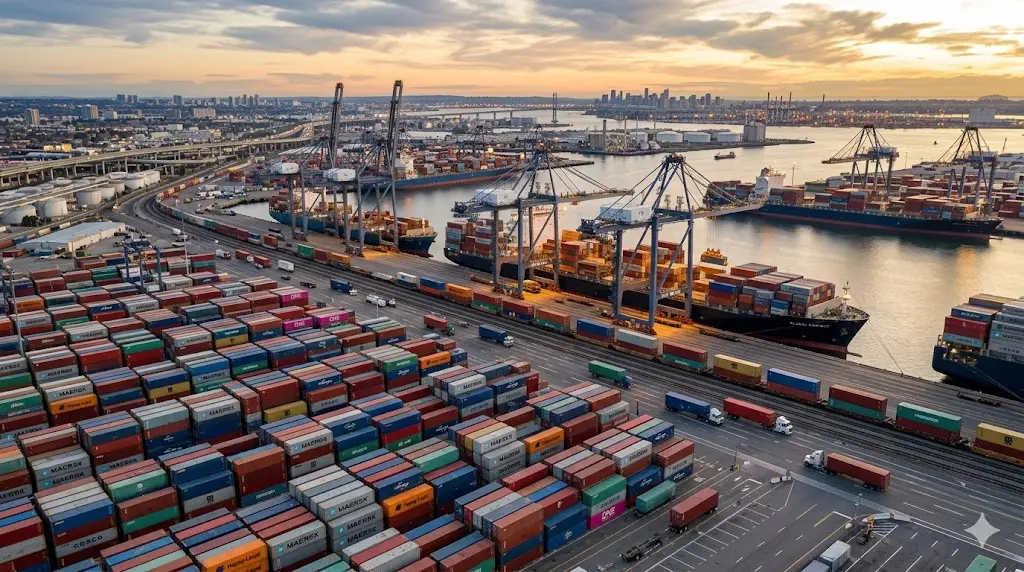
Supply chains are influencing international relations because countries now depend heavily on each other for manufacturing, technology, energy, food systems, transportation, and critical resources. A disruption in one region can quickly affect economies, governments, and political decisions across the world.
Modern supply chains connect countries through trade, technology, manufacturing, and logistics networks. Governments increasingly shape foreign policy, trade agreements, and economic alliances around supply chain security because disruptions can impact national stability, inflation, industrial growth, and political influence.
A lot of people still think international relations are mostly about military alliances or diplomacy meetings.
That’s only part of the picture now.
Today, supply chains quietly influence everything from semiconductor production and energy access to food pricing and transportation systems. Countries are competing not only for political influence but also for control over manufacturing hubs, shipping routes, raw materials, and logistics infrastructure.
Here’s the thing. Global supply chains made economies more connected, but they also made countries more vulnerable to disruptions happening far beyond their borders.
What Is the Connection Between Supply Chains and International Relations?
Global Supply Chain: A worldwide network involving manufacturing, transportation, suppliers, logistics systems, and trade partnerships that move products, materials, and services between countries.
Supply chains influence international relations because nations rely on cross-border trade for essential goods and industrial production.
That dependency creates both cooperation and tension.
Countries often negotiate trade agreements, infrastructure partnerships, and diplomatic arrangements partly to secure stable access to critical products and resources.
Research from World Economic Forum shows that supply chain resilience has become a major concern for governments and multinational industries due to increasing geopolitical and economic uncertainty.
Honestly, supply chains now function almost like invisible political infrastructure.
Why Supply Chains Matter More in 2026
Supply chains matter more in 2026 because governments learned how fragile international trade systems can become during crises.
A shipping disruption can raise inflation.
A manufacturing shortage can slow entire industries.
A trade restriction can affect diplomatic relationships almost immediately.
That level of interconnectedness changes how countries think about national security.
In my experience, governments used to prioritize efficiency above all else. Now resilience matters just as much. Countries increasingly want supply chain redundancy, regional partnerships, and local production capacity for critical industries.
Expert Tip
Businesses operating internationally should monitor geopolitical developments closely because trade restrictions, transportation disruptions, and diplomatic tensions can rapidly affect supply availability and operational costs.
How Supply Chains Influence International Relations Step by Step
Supply chains shape global relationships through several interconnected economic and political pressures.
1. Countries Depend on Shared Manufacturing Networks
Very few countries produce everything domestically anymore.
Electronics, automotive systems, pharmaceuticals, food products, and industrial materials often rely on international manufacturing partnerships.
That creates economic interdependence.
2. Trade Agreements Become Strategic Tools
Governments negotiate trade agreements partly to secure reliable supply access and strengthen economic alliances.
Trade policy increasingly overlaps with national security planning.
3. Transportation Routes Gain Political Importance
Shipping lanes, ports, rail systems, and logistics corridors influence international influence and economic power.
Countries controlling major transportation infrastructure often gain geopolitical advantages.
4. Resource Competition Intensifies
Critical materials like rare earth minerals, semiconductors, energy resources, and agricultural products influence diplomatic strategy.
Access to supply chains increasingly shapes foreign policy decisions.
5. Economic Pressure Becomes a Political Weapon
Sanctions, export controls, and trade restrictions are now commonly used as geopolitical tools.
Supply chains can become instruments of diplomatic pressure.
The Counterintuitive Reality About Globalization
Here’s a point many people don’t expect.
Globalization didn’t reduce geopolitical competition. In some ways, it intensified it.
Countries became economically connected, but that also increased vulnerability when political tensions rise. A nation heavily dependent on imported technology, energy, or manufacturing may face serious economic pressure during international disputes.
What most people overlook is that economic dependency can create political leverage.
I’ve seen policymakers increasingly describe supply chains as strategic assets rather than purely commercial systems.
That’s a huge shift from older globalization thinking.
Why Technology Supply Chains Are Creating Political Tension
Technology industries sit at the center of many international supply chain debates now.
Semiconductors, telecommunications equipment, cloud infrastructure, artificial intelligence systems, and cybersecurity technology all carry strategic importance.
That changes how governments approach trade.
According to Organisation for Economic Co-operation and Development, global supply chain resilience and technology security are becoming major priorities for economic and policy planning across multiple regions.
Countries increasingly want greater control over:
Semiconductor manufacturing
Data infrastructure
Telecommunications networks
Critical software systems
Advanced industrial technology
Honestly, technology supply chains now influence diplomacy almost as much as traditional energy politics in some cases.
Real-World Example
A technology manufacturer relying heavily on overseas semiconductor suppliers faced severe production delays during a regional trade dispute.
Instead of depending on one sourcing region afterward, the company expanded partnerships across multiple countries and invested in regional manufacturing support.
That diversification improved stability, even though operational costs initially increased.
How Energy Supply Chains Affect International Relations
Energy remains one of the most politically sensitive supply chain sectors globally.
Oil, natural gas, renewable energy components, and electricity infrastructure influence diplomatic relationships, trade agreements, and regional alliances.
Countries dependent on imported energy often adjust foreign policy priorities based on supply security concerns.
At the same time, renewable energy transitions are changing global power dynamics gradually.
Some governments are investing aggressively in battery manufacturing, solar infrastructure, and rare mineral access because future energy systems depend heavily on supply chain control.
Expert Tip
Organizations exposed to international energy markets should diversify suppliers and transportation routes because geopolitical tensions can rapidly affect pricing and availability.
Why Food Supply Chains Are Becoming Political Issues
Food systems are increasingly connected to international relations too.
Climate disruptions, transportation costs, export restrictions, and agricultural shortages can affect global food pricing quickly.
That creates economic and political pressure.
What most guides miss is how emotionally sensitive food supply issues become during periods of instability. Rising food prices often trigger public frustration faster than many other economic problems.
Governments know that.
That’s why agricultural trade agreements and food security policies now receive greater strategic attention internationally.
The Human Side of Supply Chain Politics
Here’s my hot take.
Some political discussions treat supply chains like abstract economic systems while ignoring the people working inside them.
Factory workers, truck drivers, warehouse employees, agricultural laborers, shipping crews, and logistics operators keep international trade functioning every day.
Yet labor conditions often receive less attention than corporate efficiency targets.
In my opinion, sustainable supply chains require balancing economic efficiency with workforce stability and fair labor practices. Ignoring labor realities eventually creates operational and political risk.
What Actually Works in Modern Supply Chain Strategy
Research findings increasingly show that resilient supply chain strategies prioritize flexibility over pure cost reduction.
Successful organizations often focus on:
Supplier diversification
Regional manufacturing support
Inventory visibility
Transportation flexibility
Technology integration
Risk monitoring systems
Here’s the thing though.
No supply chain becomes completely disruption-proof. Businesses and governments can reduce risk, but global trade systems remain vulnerable to political tensions, environmental events, and economic shocks.
That unpredictability is probably permanent now.
Expert Tip
Businesses expanding internationally should evaluate political stability and transportation infrastructure alongside manufacturing costs when choosing suppliers.
Will Supply Chains Continue Shaping International Relations?
Absolutely.
Supply chains increasingly influence trade policy, national security planning, technology competition, environmental policy, and diplomatic negotiations worldwide.
Governments now recognize that economic security and political stability depend heavily on reliable access to goods, energy, technology, and transportation systems.
Still, international cooperation remains necessary.
No country can realistically isolate itself completely from global trade networks without major economic consequences. The challenge involves balancing interdependence with resilience.
Honestly, supply chains may become one of the defining geopolitical issues of the next decade.
People Most Asked About Why Supply Chains Is Influencing International Relations
Why do supply chains affect international relations?
Supply chains connect countries economically through trade, manufacturing, logistics, and resource access. Disruptions or dependencies can influence diplomacy and foreign policy decisions.
What industries are most affected by global supply chains?
Technology, energy, food production, pharmaceuticals, automotive manufacturing, and consumer electronics are heavily affected by international supply chain systems.
Why are governments focusing on supply chain security?
Governments want to reduce economic vulnerability caused by shortages, geopolitical tensions, transportation disruptions, or overdependence on single suppliers.
How do trade restrictions impact supply chains?
Trade restrictions can slow production, increase prices, reduce product availability, and create diplomatic tension between countries.
What role does technology play in supply chain management?
Technology improves inventory tracking, logistics planning, transportation efficiency, forecasting, and operational visibility across international trade systems.
Are supply chains becoming more regionalized?
In many cases, yes. Some companies and governments are investing more in regional manufacturing and diversified sourcing to improve resilience.
Can supply chains influence national security?
Absolutely. Access to critical materials, technology systems, energy supplies, and industrial manufacturing capabilities directly affects economic and national security planning.
Businesses, startups, agencies, bloggers, and SEO professionals seeking stronger online growth can improve brand visibility through PR distribution services and local SEO services. These platforms help generate high authority backlinks, increase organic traffic, strengthen SEO ranking, and support instant publishing with broader media coverage for competitive industries.