
The Trump administration is engaged in a concerted effort to restrict states from implementing their own regulations on artificial intelligence (AI). This initiative includes the establishment of a Department of Justice (DOJ) litigation task force, evaluations by the Commerce Department of state laws deemed "burdensome," and proposals to Congress urging a national regulatory standard. Despite these efforts, states have introduced a staggering 1,208 AI-related bills in 2025, with 145 already enacted. Congress has also expressed its opposition to federal preemption of state laws, demonstrated by a 99-1 Senate vote against an AI moratorium in the One Big Beautiful Bill Act.
Doug Fiefia, a Republican state representative from Herriman, Utah, and a former Google employee, introduced the Artificial Intelligence Transparency Act (House Bill 286) this year. The bill aimed to require leading AI companies to disclose safety and child protection measures while offering whistleblower protections for individuals reporting safety issues. Although it received unanimous approval from a House committee, it was ultimately quashed by the White House.
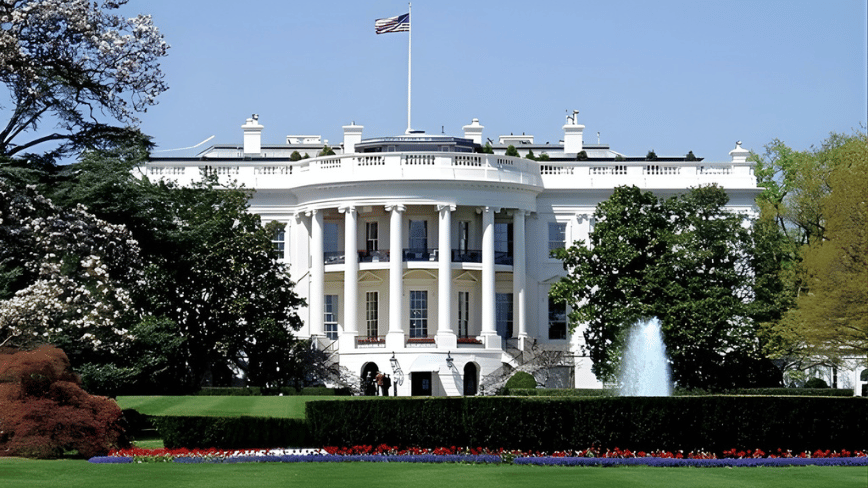
On February 12, the White House’s Office of Intergovernmental Affairs conveyed its strong opposition to Utah's HB 286 in a letter to Senate Majority Leader Kirk Cullimore Jr., labeling it an "unfixable" bill contrary to the administration's AI agenda. Despite discussions with Fiefia, no specific amendments were proposed to salvage the bill, which subsequently failed to pass in the Senate.
Fiefia emphasized the importance of asserting state rights, especially under a Republican administration, illustrating that the principle transcends partisan lines. His bill specifically targeted "frontier developers," those utilizing at least 10^26 floating-point operations to train their models, and imposed a modest penalty cap of $1 million. The administration, however, perceived the bill as a critical threat.
The Federal Response
The Trump administration's strategy against state regulation consists of three main components. The first is Executive Order 14365, signed on December 11, 2025, which established the AI Litigation Task Force within the DOJ. This task force is set to challenge state laws in federal court, citing unconstitutional burdens on interstate commerce and federal preemption. The Secretary of Commerce is tasked with evaluating state laws and identifying those that are excessively burdensome, while the FTC has been instructed to clarify when state laws are superseded by federal regulations.
In March, the Commerce Department’s evaluation pinpointed specific states, such as Colorado, California, and New York, for scrutiny, feeding information into the DOJ task force, which anticipates initiating federal legal challenges by summer 2026. These cases could take between two to three years to resolve.
The third component is a National Policy Framework for AI released on March 20, outlining legislative recommendations across several critical areas, including child protection and the preemption of state laws. The framework advocates for Congress to establish a minimally burdensome national standard to prevent a fragmented regulatory landscape.
David Sacks, a former AI czar, articulated the administration's perspective, highlighting the confusion caused by varying state regulations and raising concerns about the implications of states imposing their ideological beliefs through AI regulations.
State Legislative Actions
States have not remained passive amid these federal attempts to limit their authority. In 2023, fewer than 200 AI bills were introduced, but this number surged to 635 in 2024, with 99 enacted. The trend continued in 2025, with a total of 1,208 bills introduced and 145 enacted. Furthermore, the first two months of 2026 saw the filing of 78 safety bills focusing on chatbots across 27 states.
California's Transparency in Frontier Artificial Intelligence Act and Texas's Responsible Artificial Intelligence Governance Act both took effect on January 1, 2026. Colorado's AI Act, which prohibits algorithmic discrimination, is set to be enforced starting June 30, 2026. This legislative activity reflects a bipartisan commitment at the state level to regulate AI in the face of federal inaction.
Utah Governor Spencer Cox has publicly stated that states should maintain the authority to regulate AI for public safety, underscoring the potential risks associated with unregulated AI technologies.
The Congressional Stalemate
The administration's proposed framework necessitates Congressional approval to have legal effect, as the executive order itself does not invalidate state laws. Current federal AI legislation, such as Senator Marsha Blackburn’s TRUMP AMERICA AI Act, includes comprehensive provisions but remains a discussion draft.
Despite various attempts, Congress has resisted imposing a moratorium on state AI regulations, as evidenced by the overwhelming Senate vote against such provisions in the One Big Beautiful Bill Act. This ongoing deadlock illustrates that the regulatory landscape for AI remains unsettled.
The Financial Stakes
The lobbying efforts on both sides of this conflict have intensified, with substantial funding directed toward influencing AI policy. A super PAC supporting pro-AI regulation candidates has raised significant funds, while a bipartisan group is mobilizing resources to back candidates favoring AI safeguards.
A coalition of 36 state attorneys general has voiced opposition to federal preemption, emphasizing the necessity of state-level protections against various AI-related risks. Colorado’s attorney general has indicated plans to legally challenge the executive order.
Looking Ahead
The Trump administration has reversed previous federal safety protocols, pushing for a regulatory vacuum. In contrast, the EU has established a cohesive regulatory framework for AI, highlighting the divergent approaches between the two regions. As states push for regulation, the future of AI governance in the U.S. hangs in the balance, driven by litigation and political maneuvering rather than clear legislative action.
Doug Fiefia, now running for state senate, continues to advocate for transparency and regulation in AI, representing a new generation of lawmakers better equipped to address the challenges posed by this technology.