

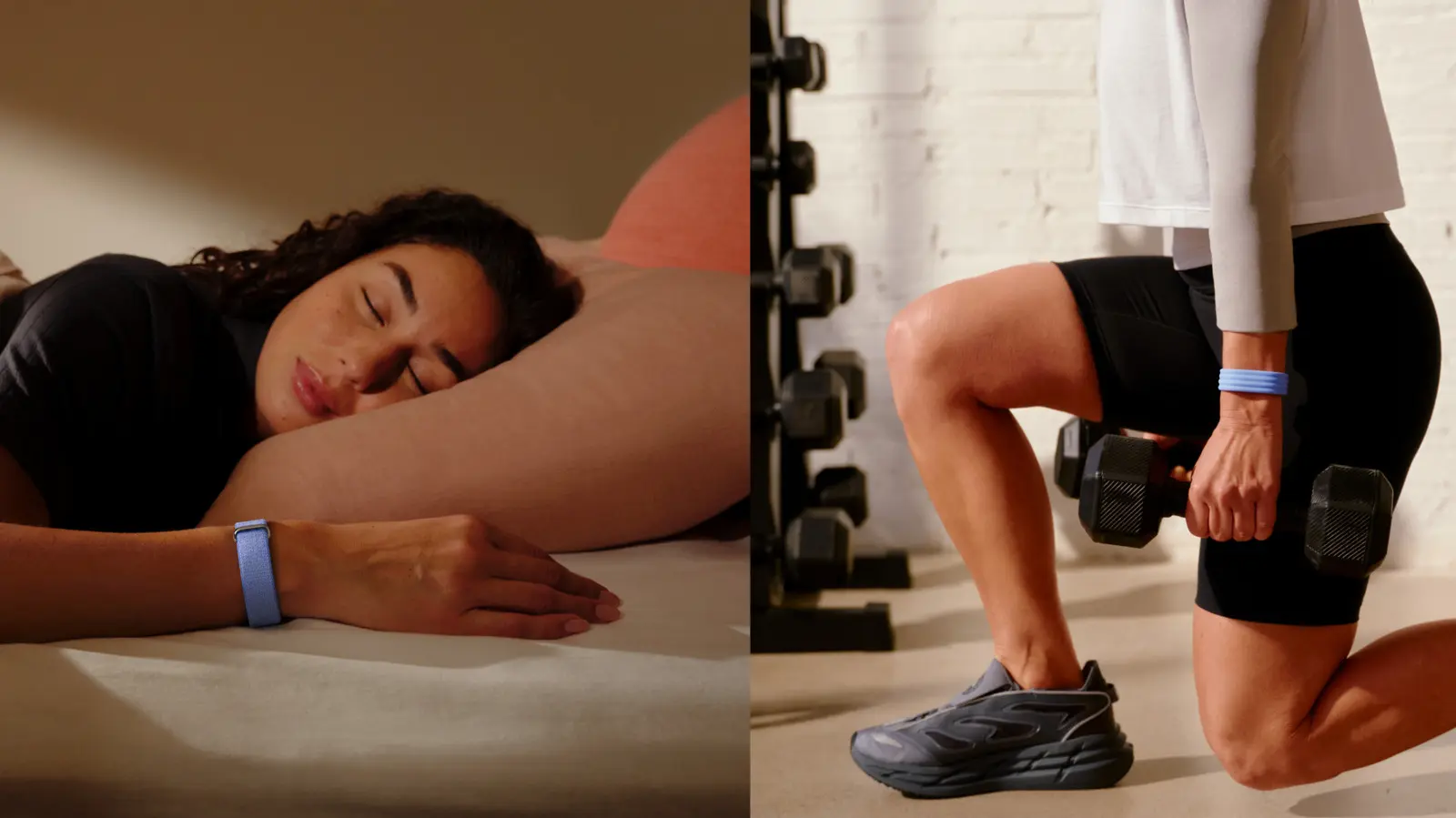
Google has officially launched the Fitbit Air, a screenless wearable that combines the company's fitness tracking expertise with artificial intelligence. First teased in March, the device is now available for pre-order at $100, positioning itself as a direct competitor to Whoop's popular strap. The Fitbit Air ditches displays entirely, relying on a small sensor pod that can be snapped into wristbands, chest straps, or even attached to clothing. This form factor, as Google's general manager for health Rishi Chandra explained, is 25 percent smaller than the Fitbit Luxe and 50 percent smaller than the Inspire 3, making it one of the most unobtrusive trackers on the market.
Design and Comfort
The Fitbit Air emphasizes comfort above all. Weighing just 12 grams (0.42 ounces) with a band and only 5.2 grams (0.18 ounces) as a standalone unit, it is designed to be worn around the clock. Google claims the device was rated more comfortable than leading competitors in an independent study conducted last year. The micro-adjustable band ensures a secure fit that moves with the body, whether at work, at the gym, or while sleeping. Three band options are available at launch: a Performance Loop Band with fine adjustment, an Active silicone band that is sweatproof and wetproof, and an Elevated Modern Band for a more fashionable look. While no chest strap or other accessories are available yet, Google confirmed more are in development.
Health and Activity Tracking
Being screenless, the Fitbit Air relies entirely on passive data collection. It monitors heart rate 24/7 and leverages Google's long-established algorithms to deliver sleep stage analysis, a nightly Sleep Score, and insights into heart rate variability (HRV). It can also detect signs of atrial fibrillation through irregular heart rhythm notifications. For exercise, the device features automatic activity detection for common workouts like running, biking, walking, rowing, elliptical, and other high-heart-rate sports. Users can manually start sessions for 40 activity types via the app, including aerobics, yoga, and dancing. Additionally, over 140 activities—from archery to household chores—can be logged retroactively. The built-in vibration motor enables a silent Smart Wake alarm that buzzes at the optimal point in your sleep cycle.
Alongside basic metrics such as steps, distance, and active minutes, the Fitbit Air provides weekly cardio load and readiness scores. Google says its new machine learning models are 15 percent more accurate than previous algorithms, and the Sleep Score has been refined to better reflect recovery. The device is water resistant to 50 meters, though it is not officially waterproof. Battery life is rated at up to one week, with five minutes of charging providing a full day of power; a complete charge takes about 90 minutes. The magnetic bi-directional charger makes it easy to dock without worrying about orientation.
AI-Powered Health Coach
The Fitbit Air is the first device to fully integrate Google's Health Coach, a Gemini-powered conversational AI that has been in public preview since October 2025. The coach analyzes personal data—including cycle health and vital medical information—to create dynamic fitness plans adapted to the user's goals and schedule. It offers workout suggestions and proactive insights that adjust based on real-time performance and changing calendars. Google emphasizes that all data remains private and secure, with no commercial use without explicit consent. This AI layer transforms the Fitbit Air from a passive tracker into an interactive wellness companion, a leap forward from the more basic analytics of traditional fitness bands.
Special Edition and Pricing
A special edition of the Fitbit Air is available in collaboration with basketball star Stephen Curry, Google's performance advisor. It features a raised interior print for increased airflow, signature design details, and an additional water-resistant coating. The special edition costs $130. Both versions include three months of Google Health Premium, which unlocks advanced analytics and personalized coaching. The devices are set to ship on May 26.
The Fitbit Air arrives at a time when the wearable market is increasingly split between full-featured smartwatches and stripped-down, always-on trackers. By removing the screen entirely, Google has taken a bold step that prioritizes comfort and battery life over glanceable data. The AI Health Coach may be the key differentiator, offering users a genuine conversation about their health rather than a dashboard of numbers. As Google continues to integrate its health and fitness acquisitions—particularly the 2021 purchase of Fitbit—the Air represents the most refined convergence of hardware and machine learning yet. With its low price point and competitive feature set, it could challenge Whoop's dominance in the screenless fitness tracker category, especially for those who value simplicity and deep data insights over notifications and apps.
Source: Engadget News