

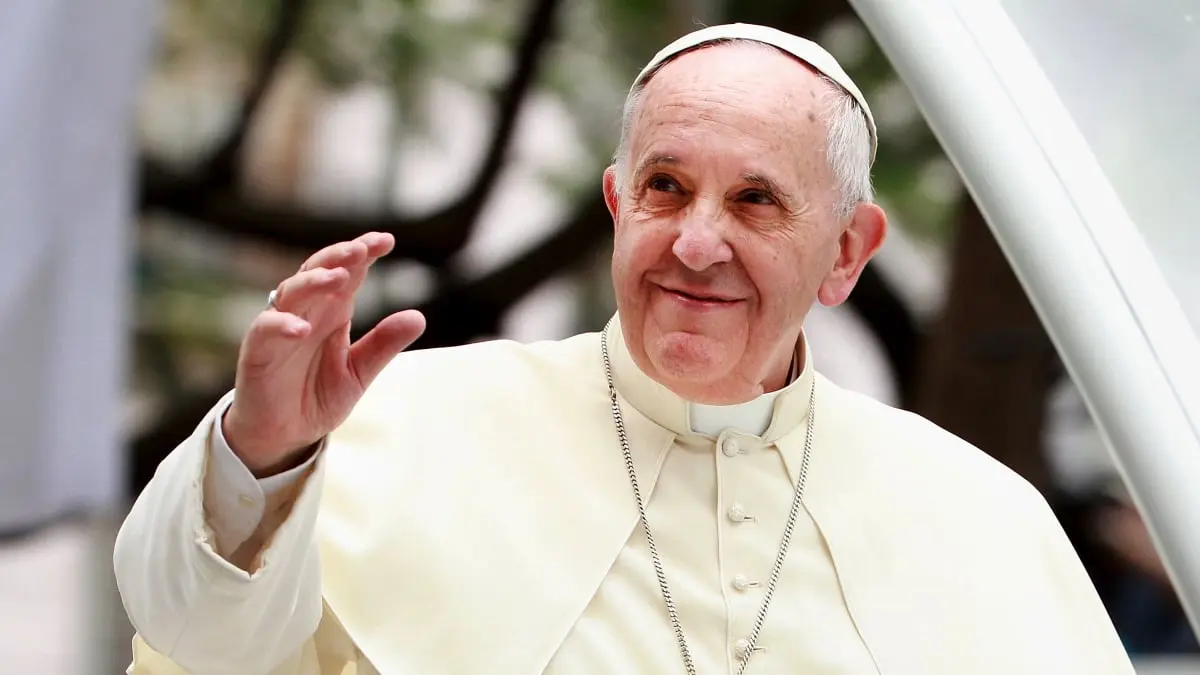
Pope Francis, the head of the Catholic Church, passed away on Easter Monday at the age of 88. He was known as the first Latin American pontiff and for his progressive ideals within a traditionally conservative institution. Throughout his papacy, he advocated for social and economic justice, environmental stewardship, and a more inclusive Church. In the weeks before his death, however, he also shared an important and forward-thinking message about new technology—a warning that has taken on new significance in the wake of his passing.
“How I would like for us to look less at screens and look each other in the eyes more!” Pope Francis said in an official video message translated from his native Spanish. “Something's wrong if we spend more time on our cell phones than with people.” This message was part of the Pope’s “Monthly Intentions” for 2025, a series of prayer topics he set each month to invite the global Catholic community—and people of goodwill everywhere—to join him in focused prayer. April’s intention, the final monthly intention before his death, was centered on new technology. The intention and related reflections posted to the Pope’s Worldwide Prayer Network specifically mentioned artificial intelligence, video calls, smartphones, and screen time in general.
The timing of this prayer intention proved poignant. Just three weeks before his death, the Pope recorded a video address in which he elaborated on the theme. “It's true, technology is the fruit of the intelligence God gave us but we need to use it well,” he said. “It can't benefit only a few while excluding others.” He called for technology to be used to unite, not to divide, and to help the poor, the sick, and persons with different abilities. In keeping with his environmentally-conscious messaging throughout his papacy, the Pope also urged using technology to “care for our common home” and to connect with one another.
Pope Francis’s warnings about technology were not new; they built on a long tradition of Catholic social teaching dating back decades. In his 2015 encyclical Laudato Si’, he decried the “technocratic paradigm” that values efficiency over human dignity and ecological balance. He warned that the same tools that can bring people together can also isolate them and create new forms of exclusion. By focusing his final monthly intention on this issue, he underscored its urgency at a time when artificial intelligence was rapidly advancing and screen time was at an all-time high.
The April 2025 prayer intention specifically called attention to the risk that virtual interactions might replace real, person-to-person contact. “The screen makes us forget that there are real people behind it who breathe, laugh, and cry,” Pope Francis said. In the accompanying written reflections, the Pope’s prayer network highlighted how smartphones, social media platforms, and AI-driven applications can either foster community or deepen loneliness, depending on how they are used. The intention encouraged the faithful to reflect on their own technology habits and to ask whether they were using digital tools to build relationships or to escape from them.
Ironically, many social media users underlined Pope Francis’s point about technology immediately after his death—albeit unintentionally. Once the news broke, social networking platforms exploded with memes, many referencing the 2024 film Conclave about the secretive meeting of Cardinals following a pope’s death. Others joked about how Vice President JD Vance was among the final people to see the Pope before his death, meeting Pope Francis on Easter Sunday. The barrage of online commentary, while often irreverent, demonstrated exactly the kind of virtual noise the Pope had warned against—a flood of content that sometimes obscured the real human grief and reverence the moment deserved.
The Pope’s message was also prescient in light of ongoing debates about artificial intelligence. At the time of his death, governments around the world were grappling with regulations for AI, and major tech companies were racing to deploy generative AI tools that could mimic human conversation, create art, and even provide companionship. Some ethicists and religious leaders had expressed concern that AI could erode human relationships by offering artificial substitutes for real interaction. Pope Francis’s prayer intention directly addressed this: “Let us pray that the use of the new technologies will not replace human relationships, will respect the dignity of the person and will help us face the crises of our times.”
Beyond the spiritual dimension, the Pope’s words carried a social and economic critique. He frequently called for the benefits of technology to be shared equitably, warning against a digital divide that leaves the poor and marginalized behind. In his final video message, he stated that technology should not benefit only a few while excluding others. This echoed his earlier statements on the need for an inclusive digital economy, where access to the internet and digital literacy are considered basic rights. He also highlighted the environmental cost of technology—the energy consumption of data centers, e-waste from discarded devices, and the carbon footprint of the digital infrastructure. For Pope Francis, the ethical use of technology was inseparable from the broader call for justice and care for creation.
The Pope’s prayer intention also resonated with parents, educators, and mental health professionals who have raised alarms about the impact of screen time on children and adolescents. Research has shown that excessive use of smartphones and social media is linked to anxiety, depression, and feelings of isolation among young people. Pope Francis’s simple plea to “look each other in the eyes more” captured a universal concern. His authority as a global moral leader gave the message added weight, prompting many Catholics and non-Catholics alike to reexamine their own relationship with technology.
Following his death, Catholic media outlets and secular news organizations alike revisited the April prayer intention as a kind of final testament. Some commentators noted that the Pope had essentially predicted the very online reaction that followed his passing. The flood of memes, jokes, and hot takes on social media illustrated how quickly a real-world event—a death, a funeral, a moment of collective mourning—can become just another piece of content consumed through a screen. The Pope’s warning that “the virtual does not replace the real” seemed more relevant than ever.
In the days after his death, as millions of people around the world tuned in to live streams of his funeral and shared tributes online, the tension between virtual connection and real presence was palpable. Many who could not attend in person found solace in watching the ceremonies remotely. Others felt that the digital experience diluted the sacredness of the moment. The Pope himself had acknowledged the double-edged nature of technology: it can bring the world together, but it can also keep us at a distance. His prayer intention offered a way to navigate that paradox—by using technology to connect, but never at the expense of real human contact.
The Catholic Church, under Pope Francis, had already begun integrating modern communication tools into its evangelization efforts while cautioning against their overuse. The Pope’s own social media presence was carefully managed; he rarely appeared on camera except for official messages, preferring instead to meet people face-to-face in audiences and visits. His final monthly intention can be seen as a culminating statement on this topic, urging believers to be both present in the digital world and grounded in the physical one.
As the Church prepares to elect a new pope, Pope Francis’s warning about technology stands as a legacy almost as important as his reforms on the family, the environment, and economic justice. The incoming pope will inherit a world where AI, social media, and digital communication are ever more pervasive. Whether the next pontiff continues this emphasis remains to be seen, but for now, Pope Francis’s final prayer intention serves as a lasting call to remember that behind every screen is a person, and that no technology can replace the simple, profound act of looking someone in the eye.
Source: Mashable News