

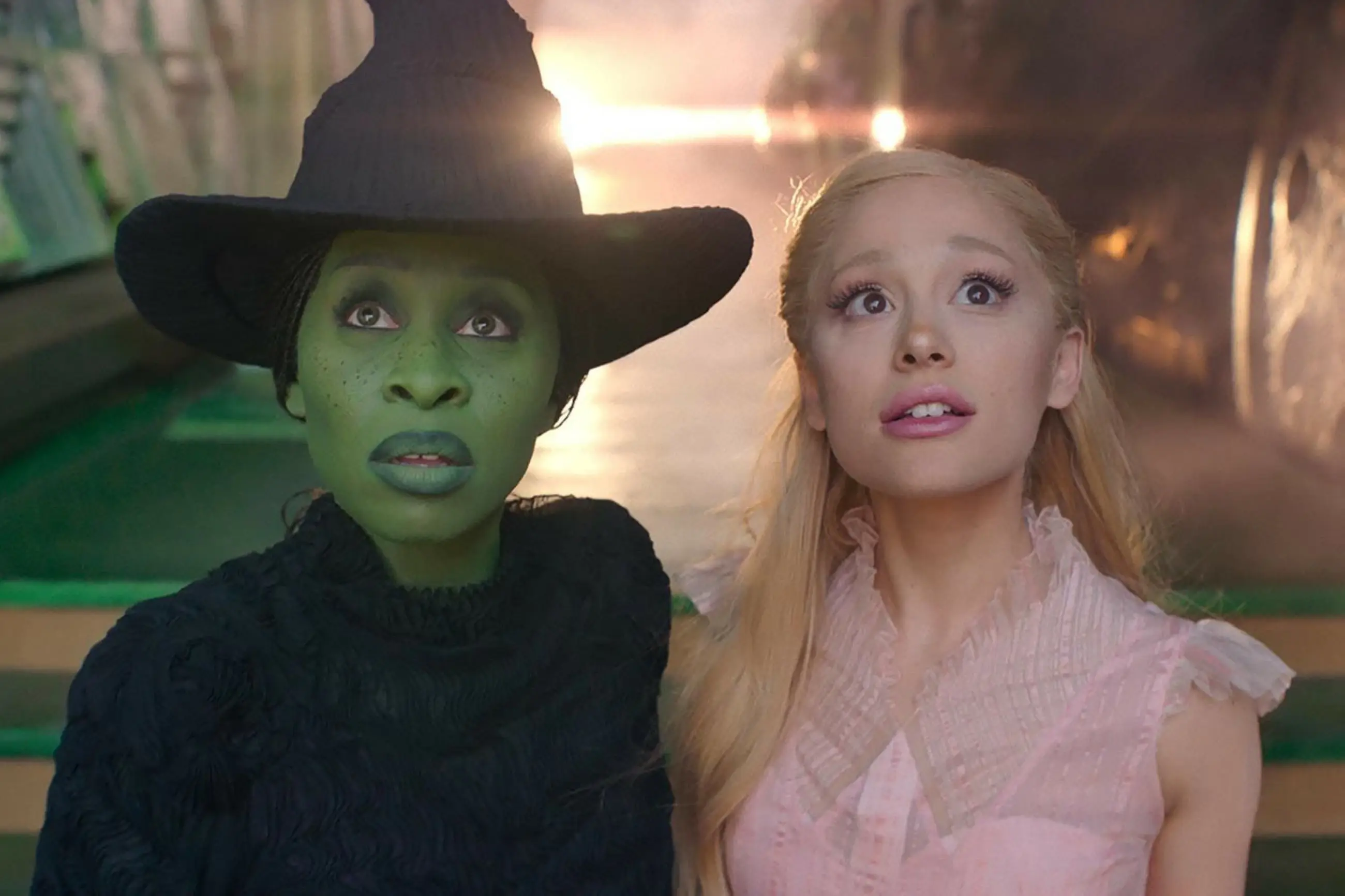
Hollywood actress Cynthia Erivo, who became the focal point of memes during the ‘Wicked: For Good’ press tour, has now spoken up about the same. In a recent interview with Variety, Erivo addressed the barrage of viral jokes that portrayed her as Ariana Grande’s protective bodyguard, delving into the racial and gendered undertones she believes fueled the online mockery.
Erivo, a Tony, Emmy, and Grammy-winning performer, is no stranger to the spotlight. Her breakout role in the Broadway revival of The Color Purple (2015) earned her a Tony Award, and her Oscar-nominated portrayal of Harriet Tubman in Harriet (2019) cemented her status as a dramatic powerhouse. Yet, it was her role as Elphaba in the long-awaited film adaptation of Wicked: For Good that thrust her into the vortex of internet culture. The film, which premiered in late 2025, reunited Erivo with pop star Ariana Grande, who played Glinda. Their on-screen chemistry and off-screen bond quickly became a media sensation, but the scrutiny soon turned personal.
The memes began circulating when Erivo, during a red-carpet event, was seen gently steering Grande away from a noisy crowd. The image went viral, spawning dozens of captions that framed Erivo as Grande’s “bodyguard” or “watchful parent.” While some found the jokes harmless, Erivo’s response to Variety highlights a deeper discomfort. “I think that people didn’t really believe that we were actually friends. But that’s also because people don’t know me very well. If I’m a friend, then I’m a friend. If I’m not, then I’m not,” she said. She added that the two still text almost every day, emphasizing that their bond is authentic and not a media fabrication.
Erivo further elaborated on the racial dynamics at play. “I think that we haven’t really come to terms with the insidious nature of how we view Black women. And I’m sure people will read this and think, ‘Oh, for goodness’ sake, it’s not about that’. But it is. Because that’s what was being made fun of. It was my physique; it was my shape; it was the fact that I was bald, it was about what I looked like. And because of that, there was this assumption that I was bigger than my co-star and so I had to be controlling or protecting, and that was my role. I would hazard a guess that it would not have been the same had it been the other way around,” she explained. This statement resonates with a broader cultural conversation about the stereotypes imposed on Black women in entertainment, who are often portrayed as strong, maternal, or aggressive caretakers rather than romantic leads or vulnerable characters.
The memes also triggered a wave of TikTok videos and Twitter threads that dissected Erivo’s facial expressions during joint interviews, often contrasting them with Grande’s bubbly demeanor. Erivo’s shaved head – a choice she has worn with pride since her early acting days – became a recurring visual punchline. For Erivo, who has spoken before about the freedom of being bald, the mockery felt like an attack on her identity. “It was my physique; it was my shape; it was the fact that I was bald,” she reiterated. The irony, she noted, is that during the press tour she was celebrated for her protective instincts – she once caught Grande as the singer tripped on stage – but the same action was twisted into a joke that reduced her to a stereotype.
Beyond the personal offense, Erivo used the interview to address the longer-term effects of the Wicked campaign on her career. “Wicked: For Good” was notably snubbed by the Academy across the board, a disappointment given the film’s massive box office success and cultural impact. The Oscars campaign window, which now stretches for months in the post-COVID era, took a toll on the cast and crew. “If it was a shorter stint of time, there is less potential for things to turn sour, and also there’s more energy to keep it going,” Erivo observed. The film, which earned critical praise for its visual effects and performances, failed to secure a single nomination – a fact that Erivo and her colleagues have struggled to process.
In the midst of the Oscars campaign, Erivo returned to rehearsals for a new production of Bram Stoker’s Dracula on the West End. “I guess it’s like a reemerging again, putting my feet back on the ground again,” she said of the transition. “Because ‘Wicked’ was its own storm in a teacup. It took over everything and, beautifully, changed my life.” The role – likely that of Van Helsing or a reimagined female character – marks a return to her stage roots after years of film work. Erivo’s stage career began in London’s West End, where she originated the role of Celie in the British premiere of The Color Purple before taking the production to Broadway. Her return to live theatre represents a grounding experience after the whirlwind of Hollywood.
Looking ahead, Erivo acknowledged the persistent chatter about a third Wicked film. Given that Elphaba survives the original story, fans have speculated about a continuation. While Erivo offered no confirmation, she left the door open: “Considering the success of the franchise, and the fact that Elphaba survives, there’s inevitably been chatter about a third movie.” This tease has excited audiences who have followed the two-part adaptation, though no official announcement exists yet.
The conversation also touched on Erivo’s broader career arc. After Harriet, she took on diverse roles – from the villainous Mare of Easttown in the HBO series to the conflicted activist in Chaos Walking. She also executive produced and starred in Genius: Aretha, earning a Primetime Emmy for her portrayal of Aretha Franklin. Her ability to cross genres and mediums has made her one of the most respected talents of her generation. Yet, as she noted, the memes reveal a persistent blind spot in how the industry and the public perceive Black women: they are often seen through a lens of physicality rather than artistry.
In the weeks following the Variety interview, social media users have begun to re-evaluate the memes, with many expressing regret for participating in what they now see as a form of microaggression. Some have pointed out that the same jokes would never have been made about a white actress in a similar protective role – for example, working with a younger co-star. Erivo’s willingness to speak out, even at the risk of being labeled “sensitive,” has opened a pathway for more honest conversations about representation in Hollywood.
Despite the challenges, Erivo remains optimistic. She is currently working on multiple projects, including a biopic of legendary singer Nina Simone, a role she is deeply passionate about. She also continues to use her platform to advocate for mental health awareness and racial justice. Her friendship with Ariana Grande, now publicly validated, stands as a testament to the genuine connections that can form even under the most bizarre scrutiny. As Erivo put it, “If I’m a friend, then I’m a friend. If I’m not, then I’m not.”
This sentiment captures the essence of her response: a refusal to let the internet define her relationships or her worth. In an era where every interaction is dissected for viral potential, Erivo’s graceful defiance serves as a reminder that behind the memes are real people with real feelings. The conversation is far from over, but one thing is clear – Cynthia Erivo will continue to stand her ground, whether on stage, on screen, or alongside her friends.
As for Ariana Grande, she has remained largely silent on the controversy but has publicly supported Erivo, sharing behind-the-scenes photos of the two laughing together. Their bond, as Erivo insists, is real – and that reality is more powerful than any meme could ever be.
Source: gulftoday News