

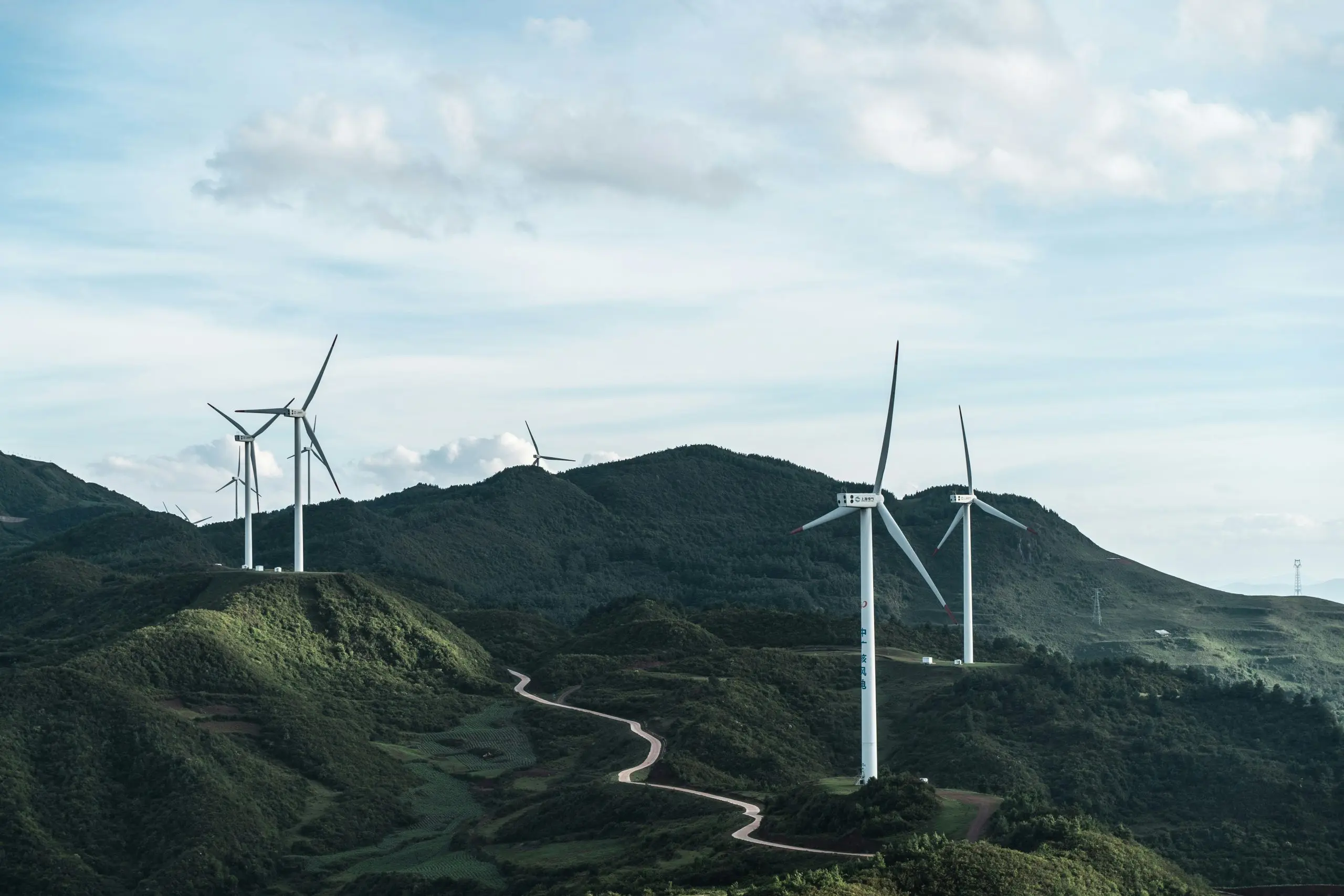
In a landmark development for the global energy sector, Chinese researchers have successfully used artificial intelligence to map the entire country’s renewable energy grid. The project, which combines satellite imagery, real-time sensor data, and advanced machine learning algorithms, provides an unprecedented level of detail about the location, capacity, and operational status of solar farms, wind turbines, hydroelectric plants, and other renewable assets.
The announcement comes at a critical time as China, the world’s largest energy consumer and greenhouse gas emitter, aims to peak carbon emissions before 2030 and achieve carbon neutrality by 2060. By leveraging AI to optimize its renewable energy infrastructure, Beijing is demonstrating how digital technologies can accelerate the transition away from fossil fuels.
A Nationwide Digital Twin of Clean Energy
The AI system, developed by a team from the State Grid Corporation of China and several academic institutions, ingests data from thousands of sensors, weather stations, and satellite feeds to create a dynamic, high-resolution map of the grid. This “digital twin” updates in near-real-time, allowing operators to predict fluctuations in supply and demand, identify bottlenecks, and reroute power efficiently.
Key features of the AI system include:
- Real-time generation forecasting: The model analyzes weather patterns, cloud cover, and seasonal variations to predict solar and wind output with over 95% accuracy up to 72 hours in advance.
- Automatic fault detection: Using computer vision on drone footage and satellite images, the AI identifies damaged panels, misaligned turbines, or vegetation encroachment, enabling rapid maintenance.
- Grid stability optimization: By balancing supply from diverse renewable sources with battery storage and demand-side response, the system minimizes curtailment—where excess energy is wasted—by up to 30%.
This is not just an academic exercise. The mapped grid already covers all 31 provinces, autonomous regions, and municipalities, encompassing more than 1.2 million individual renewable energy installations. According to initial reports, the AI has improved the utilization rate of solar and wind farms by 15% on average, cutting the equivalent of 75 million tons of CO2 emissions annually.
Why This Matters Beyond China
While China’s energy infrastructure is unique in scale, the principles behind this AI mapping are universally applicable. Many countries face similar challenges: integrating intermittent renewable sources, modernizing aging grids, and ensuring energy security while reducing emissions. The Chinese approach offers a template for what a data-driven, AI-optimized grid can achieve.
For developing nations in particular, the ability to leapfrog traditional grid upgrades using AI could be transformative. Instead of building expensive, centralized control systems, they can deploy cloud-based AI models that operate over existing networks. The Chinese system relies heavily on open-source machine learning frameworks and edge computing, making it potentially replicable at lower cost.
International energy organizations have already expressed interest. The International Renewable Energy Agency (IRENA) is reportedly studying the methodology to adapt it for a global renewable energy atlas. Meanwhile, researchers in India, Brazil, and the European Union are exploring partnerships to test similar approaches in their own national grids.
The Role of AI in Energy Transition
The success of China’s grid mapping is part of a broader trend of AI applications in the energy sector. Globally, AI is being used to optimize everything from battery charging schedules to carbon capture operations. However, the Chinese project stands out because of its scope and integration across the entire national grid.
Experts highlight several breakthroughs that could shape future energy systems:
- Machine learning for weather modeling: Traditional numerical weather prediction is computationally expensive. The AI uses deep learning to approximate atmospheric physics, allowing faster and cheaper forecasts for renewable energy planning.
- Reinforcement learning for grid control: The system employs reinforcement learning algorithms that learn optimal power dispatch policies through simulation, much like how AlphaGo mastered the game of Go. This has reduced human operator workload by 40% while improving response times to grid disturbances.
- Generative AI for scenario planning: Using generative adversarial networks (GANs), the system can create plausible future scenarios for grid expansion under different climate policies, helping policymakers make informed investment decisions.
These techniques are not static; the model improves continuously as more data becomes available. China’s grid AI is expected to receive updates that integrate vehicle-to-grid technology, smart home devices, and even electric vehicle charging stations as distributed energy resources.
Challenges and Limitations
Despite its promise, the AI mapping project is not without hurdles. Data privacy and cybersecurity are major concerns, as a centralized digital twin of the entire energy infrastructure could become a prime target for cyberattacks. Chinese authorities have implemented strict access controls and encryption, but the risk remains.
Additionally, the AI’s recommendations are only as good as the data it receives. In remote or rugged areas, sensor coverage is sparse, leading to lower prediction accuracy. The team is working on using satellite-based synthetic aperture radar and unmanned aerial vehicles to fill these gaps.
Another limitation is the integration with legacy coal and gas plants that still dominate China’s energy mix. The AI must constantly balance renewable output with the slower response times of thermal power stations. Researchers are developing hybrid models that can smoothly transition between sources as renewables increase their share.
From a policy perspective, the centralized nature of China’s grid and its top-down decision-making process made the deployment easier than it might be in more fragmented, market-driven systems. In the United States, for instance, grid operators are often private companies with competing interests, and regulatory approval for such a comprehensive AI system would require extensive coordination among dozens of independent system operators.
Global Reactions and Future Outlook
The international community has taken note. The European Commission has announced a €200 million initiative to develop a European digital twin of the electricity grid, inspired by China’s progress. Similarly, the US Department of Energy’s “Grid Modernization Initiative” now includes an AI component focused on real-time grid mapping.
Private sector players are also moving. Major tech companies like Google, Microsoft, and Amazon have all invested in AI for energy management, but none have achieved the national-level integration that China has demonstrated. Startups are rushing to commercialize similar solutions for smaller-scale grids, such as those serving islands or industrial parks.
Academics point out that the real test will come as weather patterns become more extreme due to climate change. The AI must adapt to more frequent and intense storms, droughts, and heatwaves that stress grid infrastructure. Early simulations suggest that the system can handle a 20% increase in extreme weather events without major service disruptions, a claim that will be put to the test in the coming years.
For the rest of the world, the message is clear: artificial intelligence is no longer a futuristic concept for energy management—it is a practical tool already delivering measurable results. China’s AI-mapped grid may be just the first step toward a global network of intelligent, self-optimizing clean energy systems that could fundamentally reshape how humanity produces and consumes electricity.
As more countries follow suit, the lessons learned from China’s experience will be invaluable. The combination of big data, machine learning, and renewable energy technology offers a pathway to decarbonize economies while maintaining reliability and affordability. The AI map of China’s grid is not just a national achievement—it is a glimpse into the energy future that awaits the entire planet.
Source: AI News News