

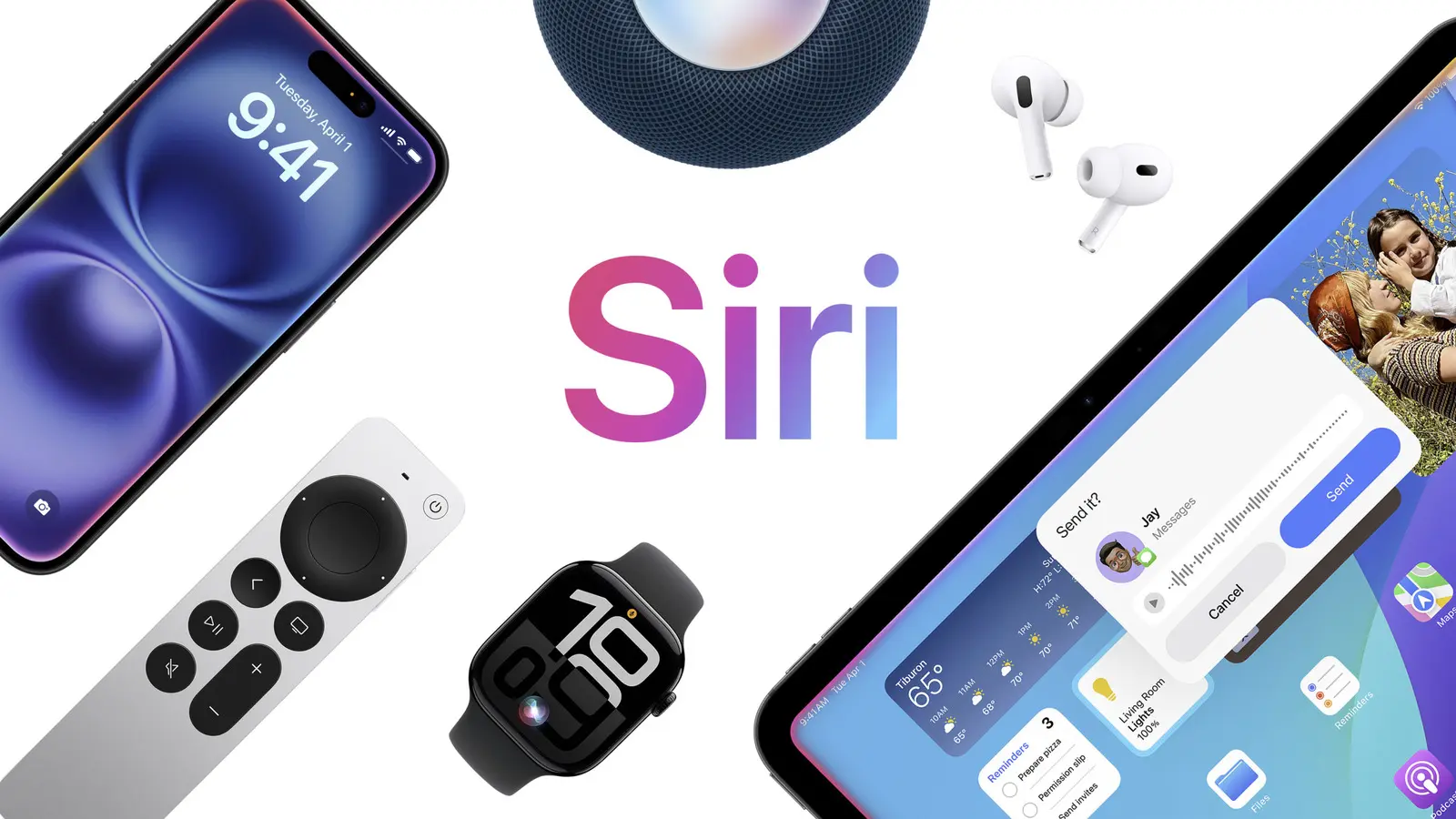
Apple has agreed to pay $250 million to settle a class action lawsuit that accused the company of misleading iPhone buyers about the arrival of a more intelligent, AI-powered version of Siri. The lawsuit, filed in the United States, claimed that Apple promoted the new Siri as a key feature of its Apple Intelligence suite announced at WWDC 2024, but failed to deliver the promised functionality almost two years later. The settlement, pending court approval, covers U.S. buyers of the iPhone 16 lineup and the iPhone 15 Pro, offering financial compensation to those who expected the upgraded assistant on their devices.
The original announcement at WWDC 2024 painted a vision of a Siri that could understand the context of what appeared on a user's screen and take actions within apps on behalf of the user. This was touted as a major leap forward from earlier versions of Siri, which often struggled with complex queries and lacked deep integration with third-party applications. Alongside the Siri enhancements, Apple Intelligence included features such as text editing tools, image generation capabilities, and integration with OpenAI's ChatGPT. However, while some of these components rolled out gradually throughout 2024 and 2025, the promised Siri update—the one that would transform the assistant into a proactive, context-aware helper—remained conspicuously absent.
Apple did not publicly acknowledge the delay until March 2025, more than five months after the iPhone 16 launched. The iPhone 16 was marketed as a device built for Apple Intelligence, with hardware designed to run the new AI features. But by the time the delay was announced, many consumers had already purchased the phone based on the expectation of a fully intelligent Siri. The company quietly pulled advertisements that had been airing in the lead-up to the iPhone launch, which had prominently showcased the new Siri capabilities. The settlement does not require Apple to admit any wrongdoing, nor does it obligate the company to change its marketing practices in the future.
The lawsuit highlights a growing tension between the promises of artificial intelligence and the reality of product development. Apple's delay in shipping a fully realized AI-powered Siri reflects broader challenges in the tech industry, where ambitious AI features are often announced long before they are ready for prime time. For Apple, the stakes are particularly high because Siri has long been perceived as lagging behind competitors like Google Assistant and Amazon Alexa. The company has invested heavily in machine learning and AI research, but translating that into a consumer-facing product that can understand complex, context-dependent commands has proven difficult.
The timeline for the new Siri is now projected for inclusion in iOS 27, which is expected to be released later this year. Reports indicate that Apple has partnered with Google to use the Gemini models to power the advanced capabilities of Siri. This partnership marks a shift in Apple's approach to AI. Historically, Apple has preferred to develop its own technologies in-house, but the delay and the need to catch up with rivals have forced the company to seek external help. Gemini, Google's family of large language models, is known for its ability to understand nuanced language and perform multi-step reasoning—skills that are essential for a truly intelligent assistant.
Critics argue that Apple's failure to deliver on its Siri promises could damage consumer trust in the company's AI initiatives. The settlement, while large, may only be a minor financial hit for Apple, which reported over $100 billion in revenue in its most recent fiscal quarter. However, the reputational damage could be more significant, especially as competitors like Samsung and Google continue to roll out AI features on their own devices. Google's Pixel lineup, for example, has integrated Gemini directly into the phone's operating system, offering features like call screening, real-time translation, and photo editing that feel more polished than what Apple has demonstrated so far.
The class action settlement covers any U.S. resident who purchased an iPhone 16, iPhone 16 Plus, iPhone 16 Pro, or iPhone 16 Pro Max, as well as those who bought an iPhone 15 Pro or iPhone 15 Pro Max. The exact payout per claimant has not been determined, but it is expected to be relatively modest given the large number of potential class members. The settlement also includes certain administrative costs and legal fees, which will be deducted from the $250 million fund. Apple has not commented on whether it will revise its marketing practices in light of the lawsuit, but the company has faced similar accusations in the past regarding misrepresentation of product features.
Looking back at the history of Siri, the assistant was first introduced as a standalone app in 2010 and then acquired by Apple, making its debut on the iPhone 4S in 2011. It was revolutionary at the time, offering a voice-controlled assistant that could set alarms, send messages, and answer simple questions. Over the years, Siri gained new capabilities, such as integration with HomeKit, CarPlay, and third-party apps via SiriKit. But the assistant has often been criticized for being less reliable and less capable than its rivals. The promise of Apple Intelligence was supposed to close that gap, but the delay has only widened it.
In the broader context of the industry, the race to deliver AI-powered assistants has intensified. Amazon's Alexa is being re-engineered to incorporate generative AI, and Google has integrated Gemini across its ecosystem. Even smaller companies like Amazon and Samsung are pushing forward with their own AI assistants. For Apple, the partnership with Google may be a pragmatic step, but it also raises questions about the company's long-term strategy. Will Apple eventually develop its own large language model, or will it continue to rely on partners? The company's emphasis on privacy and on-device processing could complicate the use of cloud-based AI models, even if those models are from a trusted partner like Google.
The delay in Siri's AI upgrade is just one chapter in Apple's ongoing struggle to integrate artificial intelligence into its products. Another area of concern is the Apple Vision Pro, which relies on advanced machine learning for hand and eye tracking. While the Vision Pro has been praised for its hardware, software adoption has been slow, and the device has not yet achieved widespread consumer appeal. Some analysts believe that Apple's AI efforts are being hampered by its insistence on controlling every aspect of the user experience, from hardware to software to cloud services. This vertically integrated approach has worked well in the past, but it may not be suited to the fast-paced world of AI, where collaboration and openness often lead to faster innovation.
Moreover, the lawsuit and settlement could set a precedent for how tech companies are held accountable for failing to deliver on AI promises. As AI features become more central to product marketing, regulators and consumers are becoming more vigilant about what is promised versus what is actually delivered. The Federal Trade Commission in the United States has already shown interest in cracking down on deceptive AI advertising, and other countries are likely to follow suit. Apple's settlement may be a sign that the company is willing to pay to avoid a prolonged legal battle, but it does not guarantee that future AI promises will be more realistic.
For now, iPhone users who bought into the AI vision will have to wait at least a little longer. The new Siri, now powered by Google's Gemini, is expected to arrive with iOS 27. According to sources, the update will include a host of other AI features such as improved photo editing, more advanced text summarization, and deeper integration with third-party apps. Whether that will be enough to restore consumer confidence remains to be seen. In the meantime, Apple continues to emphasize privacy and security as key differentiators, but those attributes matter little if the core selling point—a truly intelligent assistant—remains out of reach.
Source: Engadget News