

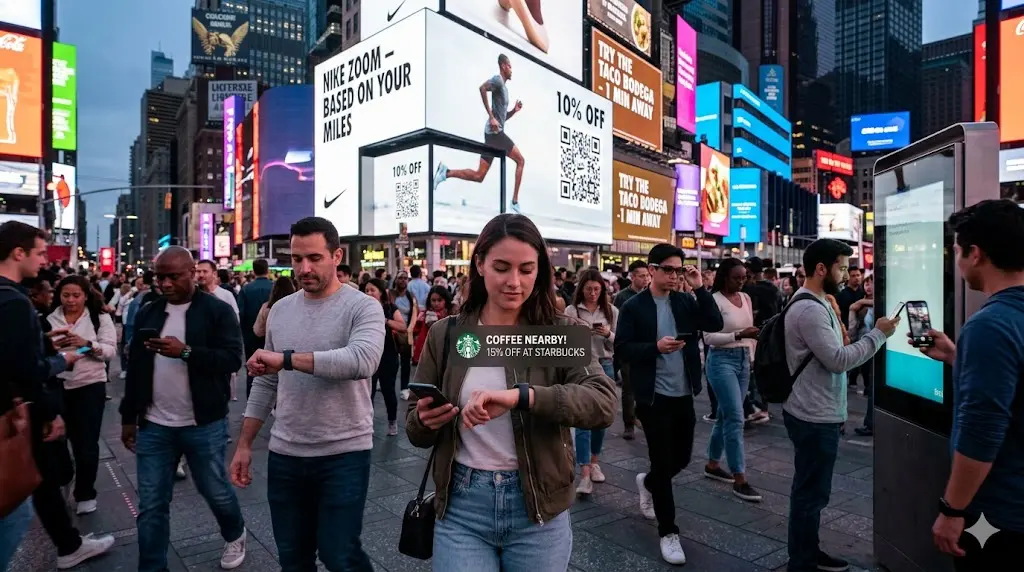
Wearable devices are changing how brands connect with people because they collect real-time behavioral data, track movement patterns, and create more personal digital experiences. From smartwatches to fitness trackers, wearable technology is giving advertisers direct insights into consumer habits that traditional advertising channels simply can’t match.
What most people overlook is this: wearable technology isn’t just another gadget trend. It’s becoming a major force behind how businesses understand attention, timing, and customer intent across global markets.
Wearable technology is transforming digital advertising by allowing brands to deliver hyper-personalized campaigns, real-time notifications, location-based promotions, and health-focused consumer insights. In 2026, advertisers are investing heavily in wearable-driven marketing because it improves engagement, increases conversion rates, and creates stronger customer relationships.
What Is Wearable Technology in Digital Advertising?
Wearable Technology: Smart electronic devices worn on the body that collect, transmit, and analyze user data to improve digital experiences and personalized communication.
Wearables include smartwatches, fitness bands, augmented reality glasses, biometric sensors, and even smart clothing. These devices continuously gather data about movement, sleep patterns, health metrics, shopping behavior, and location activity.
Here’s the thing. Digital advertising has always struggled with timing. A consumer might see an ad at the wrong moment and ignore it completely. Wearable technology changes that because it helps brands understand context in real time.
For example, a travel company can send location-based hotel promotions to a smartwatch when a traveler lands at an airport. A fitness brand might recommend hydration products after detecting elevated workout activity from a connected wearable.
That level of personalization used to sound futuristic. Now it’s becoming normal.
According to research published by organizations like the World Economic Forum and Statista, global wearable adoption continues to grow rapidly, especially among younger consumers and health-conscious professionals.
Why Wearable Technology Matters in 2026
Digital advertising in 2026 looks very different from what it looked like even five years ago. Consumers are more selective, more privacy-aware, and honestly, more exhausted by traditional advertising.
That’s why wearable-driven advertising matters.
Brands are shifting away from broad targeting and moving toward behavioral relevance. Instead of interrupting users randomly, wearable technology allows companies to deliver messages when they’re genuinely useful.
I’ve noticed something interesting in recent campaigns across retail and wellness sectors. Consumers don’t necessarily hate advertising. They hate irrelevant advertising.
Wearable devices reduce that problem.
Real-Time Consumer Behavior Is Reshaping Marketing
Advertisers can now analyze:
Daily movement patterns
Sleep cycles
Exercise habits
Location behavior
Purchase timing
Screen interaction frequency
This data helps companies understand when customers are most likely to respond positively.
A streaming service, for instance, might send entertainment suggestions during a user’s evening relaxation period rather than during work hours. Small adjustment. Big difference.
Health and Wellness Advertising Is Exploding
One unexpected trend is how healthcare and wellness advertising are becoming deeply connected to wearable devices.
Fitness companies, supplement brands, insurance providers, and wellness apps are investing heavily in wearable integrations. Some insurers even offer discounts based on activity tracking.
That raises ethical questions, obviously. But it also creates entirely new advertising ecosystems.
Smart Cities Are Accelerating Wearable Advertising
Urban environments are becoming more connected through IoT systems and smart infrastructure. Wearable devices interact with transportation systems, payment networks, digital billboards, and navigation platforms.
In most cases, advertisers are using this connectivity to create location-aware campaigns that feel more personalized than traditional mobile ads.
A commuter walking through a shopping district might receive real-time restaurant offers directly on a smartwatch. It sounds simple, yet it changes consumer decision-making dramatically.
How to Use Wearable Technology in Digital Advertising Step by Step
Businesses that want to adapt to wearable-focused marketing need a practical strategy. Random experimentation usually fails.
1. Understand Consumer Context
Before launching campaigns, brands need to study how wearable users behave differently from smartphone users.
Wearable interactions are shorter. Faster. More immediate.
That means advertisements should focus on concise messaging rather than long promotional content.
2. Prioritize Permission-Based Marketing
Consumers are becoming cautious about personal data collection. Smart brands make transparency part of their strategy.
Be direct about:
What data is collected
Why it’s collected
How it improves user experience
Trust probably matters more now than raw targeting capability.
3. Build Short-Form Interactive Campaigns
Wearable screens are smaller, so campaigns must be optimized for quick interaction.
Strong wearable ads often include:
One-tap responses
Voice interaction
Simple notifications
Health-based incentives
Location-triggered promotions
Long messages usually don’t work well here.
4. Use AI to Improve Timing
Artificial intelligence helps brands predict when consumers are most receptive to messaging.
This is where wearable technology becomes especially powerful. AI systems can analyze patterns over time and identify engagement opportunities automatically.
For example, food delivery companies can predict when users are likely to order meals based on movement, weather, and previous behavior.
5. Focus on Value Before Promotion
This might sound counterintuitive, but wearable advertising works best when it feels helpful rather than promotional.
A hydration reminder sponsored by a beverage company often performs better than a standard product advertisement.
People respond to usefulness.
Common Mistake: Assuming More Data Automatically Means Better Advertising
A lot of businesses think wearable technology guarantees better marketing because it provides more information.
Not true.
Too much data without strategy creates confusion. Some companies collect enormous amounts of consumer behavior information and still produce irrelevant campaigns.
What actually matters is interpretation.
I’ve seen campaigns with limited but highly focused wearable insights outperform campaigns driven by massive datasets. Relevance beats volume almost every time.
There’s also a growing privacy backlash happening globally. Consumers appreciate personalization until it starts feeling invasive.
That balance matters more than many advertisers realize.
Expert Tips and What Actually Works
Here’s what most guides miss: wearable advertising is less about technology and more about emotional timing.
The strongest campaigns connect with users during moments that already matter to them.
A wellness notification after a stressful workday feels relevant. A random product ad during a workout feels annoying.
That difference changes engagement rates dramatically.
Expert Tip
Brands should design wearable campaigns around “micro-moments” rather than traditional advertising schedules. Consumers interact with wearable devices dozens of times daily, but usually for only a few seconds at a time.
In my experience, companies that focus on tiny moments of usefulness tend to build stronger long-term customer trust.
A Real-World Example
A hypothetical airline launches a wearable-integrated travel experience. Instead of bombarding travelers with generic emails, the company sends:
Boarding reminders via smartwatch
Lounge access alerts near terminals
Weather updates for destination cities
Transportation recommendations after arrival
Engagement rates increase because the information feels practical rather than promotional.
That’s where wearable advertising becomes powerful.
The Counterintuitive Reality
You’d think wearable advertising would make digital marketing feel more intrusive. Surprisingly, the opposite often happens.
When campaigns become more relevant and timely, consumers may actually perceive fewer interruptions overall.
It’s weird, honestly, but personalization can reduce advertising fatigue when done carefully.
What Challenges Could Slow Wearable Advertising Growth?
Despite the excitement, several challenges still exist.
Privacy Regulations
Governments worldwide are introducing stricter data protection laws. Advertisers using biometric and behavioral data face growing legal responsibilities.
Companies that ignore privacy concerns will probably struggle in the next few years.
Device Fragmentation
Not all wearable devices operate the same way. Different platforms have different capabilities, screen sizes, and privacy policies.
Creating universal campaigns can get messy fast.
Consumer Trust Issues
Some users remain uncomfortable sharing health and behavioral information with advertisers.
That hesitation isn’t going away anytime soon.
Brands that prioritize transparency and ethical communication will likely perform better over time.
How Wearable Technology Is Affecting Global Industries
Wearable advertising is influencing multiple sectors simultaneously.
Retail
Retailers use wearable data to deliver personalized promotions, loyalty rewards, and in-store recommendations.
Healthcare
Healthcare organizations promote wellness services through fitness-based engagement programs.
Travel
Travel brands rely on location-based wearable notifications to improve customer experiences.
Sports and Fitness
Athletic companies track performance metrics and create highly targeted product recommendations.
Entertainment
Streaming platforms analyze user activity patterns to improve content recommendations and advertising timing.
Honestly, this is probably only the beginning.
People Most Asked About Wearable Technology and Digital Advertising
How does wearable technology improve advertising performance?
Wearable devices provide real-time behavioral insights that help brands deliver more personalized and timely advertising. This usually improves engagement rates and customer interaction.
Are consumers concerned about privacy in wearable advertising?
Yes, many consumers worry about how companies collect and use health and behavioral data. Transparency and permission-based marketing are becoming essential for trust.
Which industries benefit most from wearable advertising?
Healthcare, fitness, travel, retail, and entertainment industries currently benefit the most because wearable data aligns closely with consumer behavior in those sectors.
Will wearable technology replace smartphone advertising?
Probably not completely. Smartphones still dominate digital interaction, but wearable devices are becoming an important secondary channel for personalized engagement.
Why are brands investing more in wearable marketing in 2026?
Brands see higher engagement opportunities through contextual advertising, AI-driven personalization, and real-time consumer insights that wearable technology provides.
Can small businesses use wearable advertising effectively?
Yes, especially local businesses using location-based promotions or health-focused marketing campaigns. Smaller campaigns can still perform well with focused targeting.
Final Thoughts on Why Wearable Technology Is Transforming Digital Advertising Worldwide
Wearable technology is transforming digital advertising worldwide because it changes how brands understand human behavior in real time. Instead of relying on broad assumptions, advertisers can now respond to context, timing, movement, and intent with far greater precision.
Still, technology alone won’t guarantee better marketing. Brands that respect privacy, prioritize usefulness, and communicate naturally will probably earn stronger customer loyalty in the years ahead. Wearable-driven advertising isn’t just about smarter devices. It’s about creating interactions that actually feel relevant.
If businesses want sustainable growth in 2026 and beyond, they’ll need to understand how wearable technology fits into the future of consumer attention.
Businesses aiming to boost brand visibility and organic traffic can combine press release distribution services with targeted SEO services to secure high authority backlinks, stronger media coverage, and faster SEO ranking improvements. Many startups, agencies, and SEO professionals are already using instant publishing solutions alongside performance-driven campaigns to expand online reach and attract qualified audiences more consistently.